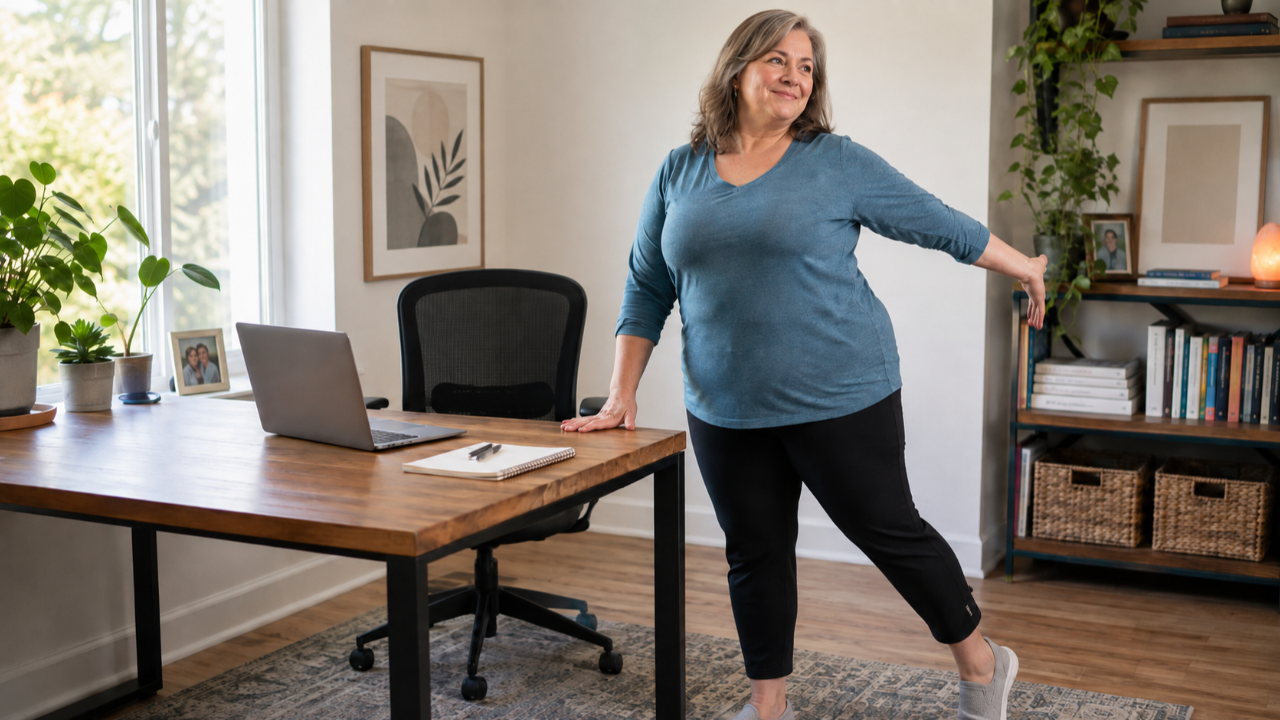
Why Beginners Should Repeat the Same Workout for a Few Weeks

When people decide to start exercising, they often assume they need a brand new workout every time to make progress.
That idea is everywhere. People are used to seeing endless exercise variations, fast-paced routines, and the message that more challenge always means more results. But for beginners, that is usually not what helps most.
In the beginning, the goal is not to constantly impress your body. The goal is to help it learn.
And that is exactly why repeating the same workout for a few weeks can be one of the smartest things a beginner can do.
At Inclusive Movement, I work with many people who are not looking for intense fitness culture. They are looking for a way to begin. They want exercise to feel possible. They want to feel less stiff, more capable, and more confident in their body. They want something they can actually stick with.
For that kind of person, repetition is not boring. It is useful.
Your body is learning, not just exercising
When you are brand new to exercise, every movement asks a lot of your body.
Even a simple squat, hinge, march, or reach is not just about muscles working harder. Your body is also trying to figure out balance, timing, coordination, breathing, joint positioning, and how to move through the pattern without unnecessary tension.
That is a lot to process.
So if every workout is completely different, your body keeps having to start from scratch. Instead of building familiarity, it keeps trying to decode new instructions.
That can leave beginners feeling awkward, discouraged, or like they are “bad” at exercise, when really they just have not had enough repetition yet.
Repeating the same workout gives the body a chance to learn the movements more deeply. The exercises start to feel less foreign. The transitions get smoother. The person feels less scattered and more capable.
That is progress.
Repetition builds confidence
One of the biggest barriers for beginners is not effort. It is hesitation.
A lot of people do not struggle because they are lazy or unmotivated. They struggle because exercise feels unfamiliar, overwhelming, or hard to get started with. When someone already feels out of shape, stiff, tired, or disconnected from their body, too much novelty can make things worse.
A familiar workout lowers that barrier.
When you know what is coming, it is easier to begin. You are not spending the whole session wondering whether you can do the next exercise, whether your form is right, or whether the workout is too advanced for you. You already have some experience with it. You know the rhythm. You know where to modify if needed.
That matters more than people realize.
Confidence is not always built by doing harder things. Sometimes it is built by repeating manageable things until they stop feeling so hard.
Repetition reduces decision fatigue
People often talk about exercise as if the hard part is the workout itself. But for many beginners, the hard part starts before they even move.
What workout should I do?
How long should it be?
Should I do strength or mobility?
Do I need something harder than last time?
Am I wasting my time if this feels too simple?
That constant decision-making can become exhausting. It creates mental friction around exercise, and mental friction is one of the fastest ways to lose consistency.
Repeating the same workout for a few weeks removes a lot of that noise.
Instead of reinventing the plan every day, the person can simply show up and do the routine. The brain does not have to work as hard. The step into movement feels smaller. And when the step into movement feels smaller, people are much more likely to take it.
This is one of the reasons simple programs often work better than complicated ones, especially in the beginning. The easier it is to follow, the more likely it is to actually happen.
Repeating a workout helps you notice real progress
When workouts change all the time, it can be hard to tell whether you are improving.
If every session uses different exercises, different pacing, and different demands, there is nothing stable to compare. A beginner may be making progress and still feel like they are not, simply because they never get the chance to revisit the same movements long enough to notice change.
Repetition makes progress easier to see and feel.
Maybe the first week, sitting down into a squat felt stiff and uncertain. By the third week, it feels smoother. Maybe balance was shaky at first, but now standing on one leg for a few seconds feels more controlled. Maybe getting down to the floor used to feel like a big task, and now it feels less intimidating.
Those changes matter.
They help people connect exercise with success instead of frustration. And that shift is huge, because when someone starts to notice that their body is adapting, they are much more likely to keep going.
Simple does not mean ineffective
This is a belief I would love more people to let go of.
Somewhere along the way, many people absorbed the idea that effective exercise has to be intense, complicated, or constantly changing. If it is simple, it must not be enough. If it is repetitive, it must not be working.
But that is not true.
For beginners, simple is often exactly what makes exercise effective.
A basic workout repeated consistently can improve strength, coordination, mobility, stamina, balance, and body awareness. It can help the body tolerate movement better. It can reduce fear around exercise. It can create momentum. It can help someone go from avoiding movement to trusting themselves with it.
That is not small.
In fact, for many people, those early wins are the foundation that everything else gets built on later.
Familiarity helps the nervous system settle
There is also something important to say here beyond muscles and fitness.
When movement feels unfamiliar, rushed, or confusing, the body can stay tense. A person may brace too much, hold their breath, or move with more fear and hesitation. They may not even realize they are doing it.
Repetition can help reduce that.
When the workout becomes familiar, the body often stops reacting to it like it is a new stressor every time. The person can breathe more normally. They can pay attention to how the movements feel. They can find better flow, pacing, and comfort.
This is especially important for people who are returning to exercise after a long break, living with chronic pain, carrying tension, or feeling disconnected from their body.
The goal is not just to get through the workout. It is to create an experience of movement that feels more supportive and less threatening.
That is part of what helps exercise become sustainable.
When should a beginner change their workout?
Eventually, yes, variety can be helpful.
As the body adapts, adding new exercises, new challenges, or slightly different formats can support continued progress. But that does not mean variety needs to happen right away.
A good rule is this: if the workout is still helping you practice the basics, build confidence, and feel more capable, you probably do not need to change it yet.
You might progress by adding a few reps, slowing the movement down, improving control, or needing fewer breaks. You might repeat the same structure but feel noticeably better doing it. That still counts as progress.
A routine usually needs to change when it truly feels too easy, too automatic, or no longer supportive of the person’s goals. Not just because they feel like they are “supposed” to change it.
What this can look like in real life
For a beginner, repeating the same workout for two to four weeks can be a very helpful starting point.
That might mean doing the same short strength routine three times a week. Or alternating between the same mobility session and the same walking plan. Or returning to the same five or six movements until they feel more natural.
It does not need to be fancy.
What matters is that the plan feels manageable enough to repeat and useful enough to build from.
Because that is what beginners need most. Not pressure to perform. Not constant novelty. Not another reminder that they are behind.
They need a place to start that feels realistic.
Final thoughts
If you are new to exercise, repeating the same workout for a few weeks is not a step backward. It is often the exact thing that helps you move forward.
It gives your body time to learn. It helps reduce overwhelm. It builds confidence. It makes consistency easier. And it gives you a fair chance to actually feel your progress.
You do not need a new routine every day to make exercise count.
Sometimes the most helpful thing you can do is choose a simple workout, stay with it for a little while, and let your body get better at what it is practicing.
That is not boring. That is how a lot of real progress begins.
Follow along on Instagram, TikTok, and YouTube, or join the email list at the bottom of this page to get helpful wellness tips and tricks right into your inbox.