Not Walking Much? Try This Simple Routine at Home
Walking is one of the simplest, most effective ways to support your body.
And yet… it’s not always happening.
Maybe your days feel full before they even start. Maybe your body doesn’t tolerate longer walks right now. Maybe it’s winter, or you’re navigating fatigue, pain, recovery, or just a season of life where getting outside consistently feels like a stretch.
If that’s you, you’re not alone.
And more importantly, you’re not stuck.
Because while walking is valuable, it’s not the only way to give your body what it needs.
What Walking Actually Does for Your Body
Most people think of walking as “light cardio.” But that description doesn’t really capture what’s going on beneath the surface.
Walking is a full-body, rhythmic pattern that gently stimulates multiple systems at once.
With each step, you’re:
- shifting your weight from side to side
- alternating movement between your limbs
- creating subtle joint motion through your hips, knees, and ankles
- allowing your arms to swing and your upper body to rotate
At the same time, you’re supporting:
- circulation (both blood flow and lymphatic movement)
- joint nutrition through regular, low-load movement
- nervous system regulation through repetitive, rhythmic motion
- coordination and balance, even at a basic level
It’s not just exercise. It’s communication between systems.
So when walking isn’t happening, the question becomes:
How can we still give the body some of those same inputs?
You Don’t Need to Replace Walking—You Just Need to Mimic It
If you’re not walking much right now, the goal isn’t to recreate a perfect substitute.
It’s to give your body pieces of what walking normally provides.
Think of it like this: walking is a combination of patterns.
If we break those patterns down, we can recreate them in a simpler, more accessible way.
Some of the key “inputs” your body gets from walking include:
- weight shifting from one side to the other
- alternating limb movement (right arm with left leg, and vice versa)
- gentle loading through your joints
- upper body involvement through arm swing and rotation
When you intentionally bring those elements into simple movements at home, you’re still supporting many of the same systems—just in a different format.
This is where simple, supportive movement can go a long way.
4 Simple Movements to Try at Home
You don’t need equipment. You don’t need a lot of space. And you don’t need to overthink it.
These movements are designed to gently bring back the same patterns your body would experience during a walk.
You can use a wall, countertop, or chair for support as needed.
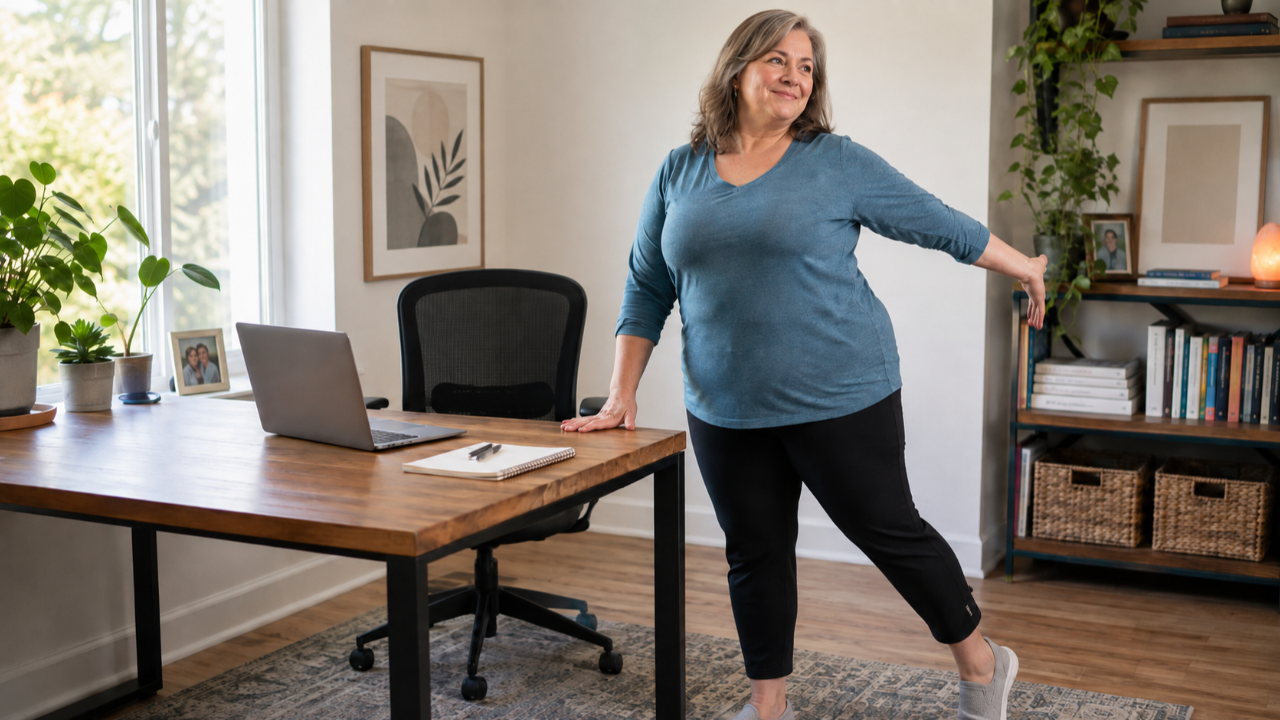
#1 Leg + Arm Lift to the Side
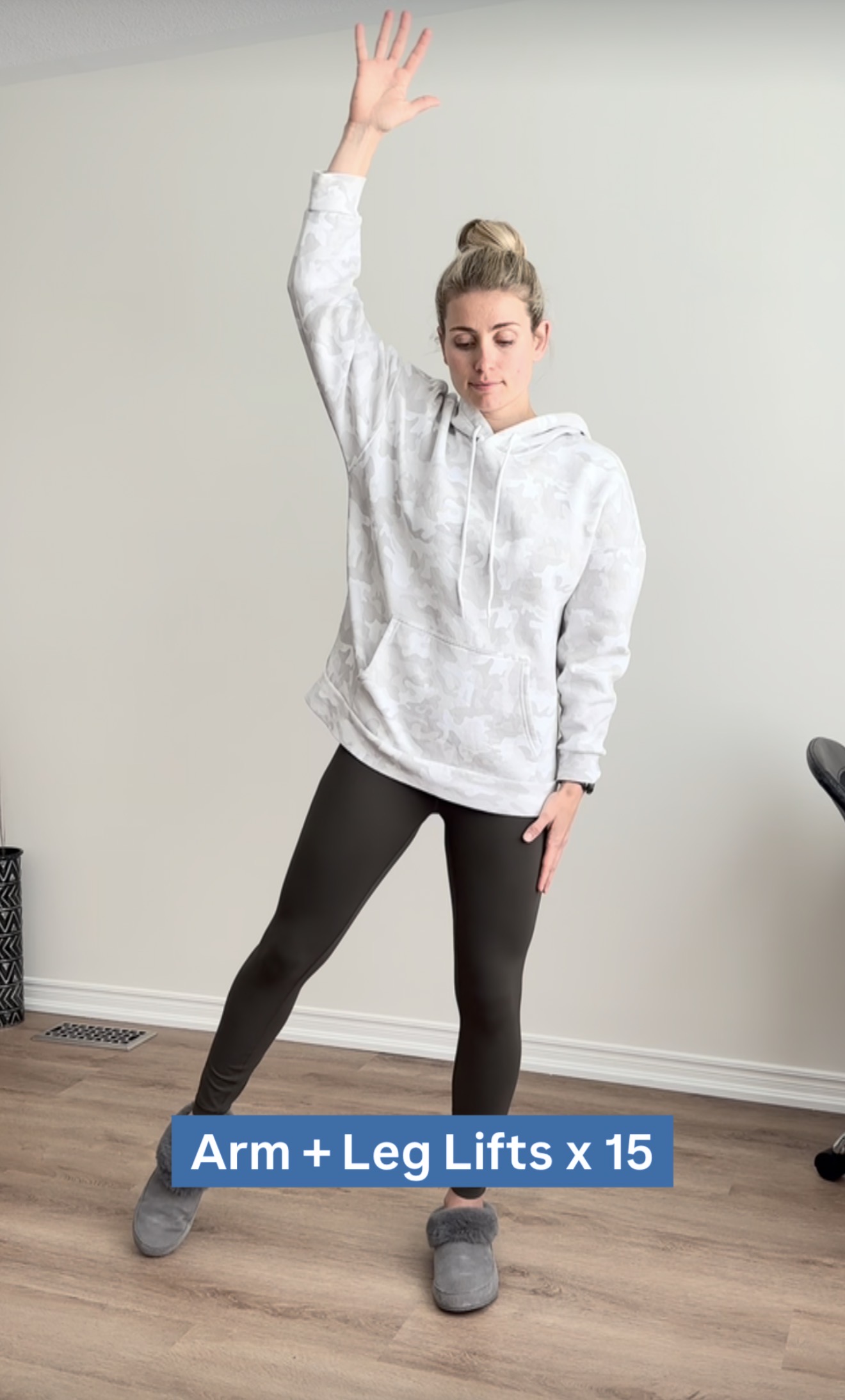
This movement focuses on lateral weight shifting, which is a key part of walking that often gets overlooked.
When you walk, your body is constantly transferring weight from one leg to the other. This helps maintain balance, coordination, and hip stability.
In this version:
- Stand with support nearby
- Shift your weight into one leg
- Gently lift the opposite leg out to the side while lifting your arm
- Return slowly and switch sides
This helps:
- improve balance and body awareness
- activate the muscles around your hips
- reintroduce controlled weight transfer
Take your time with this one. Slower is better.
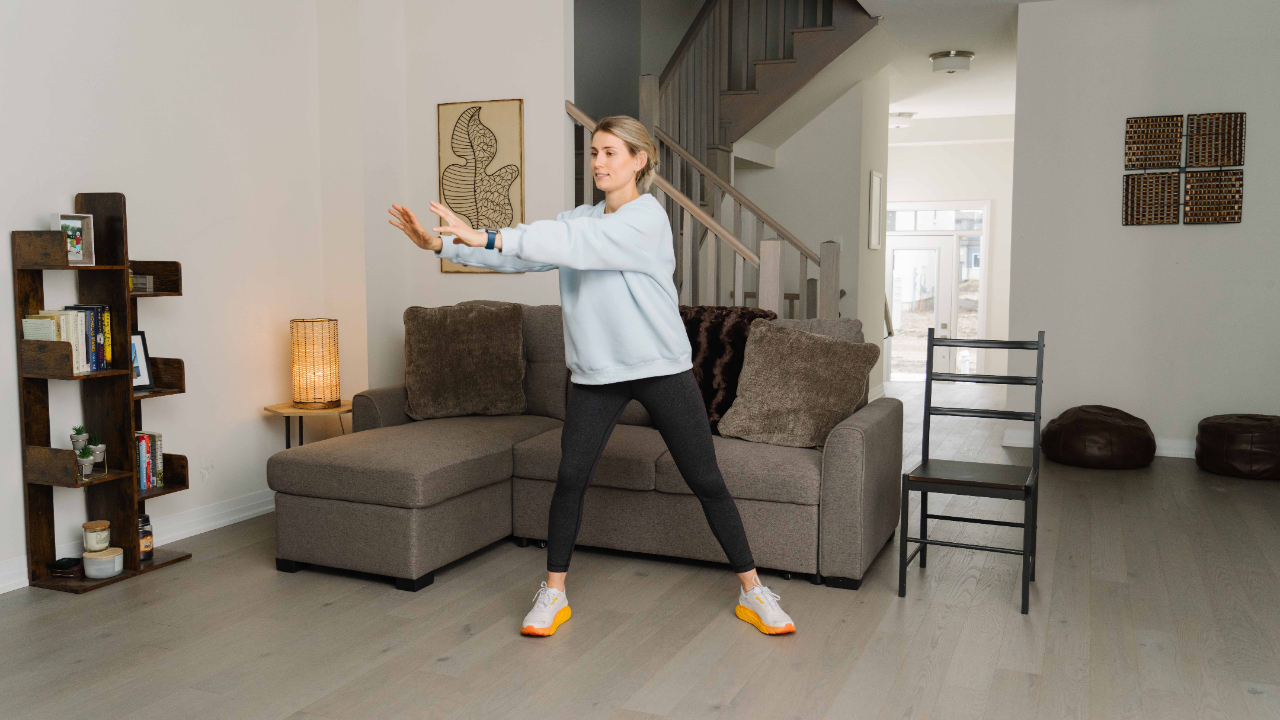
#2 Push Across
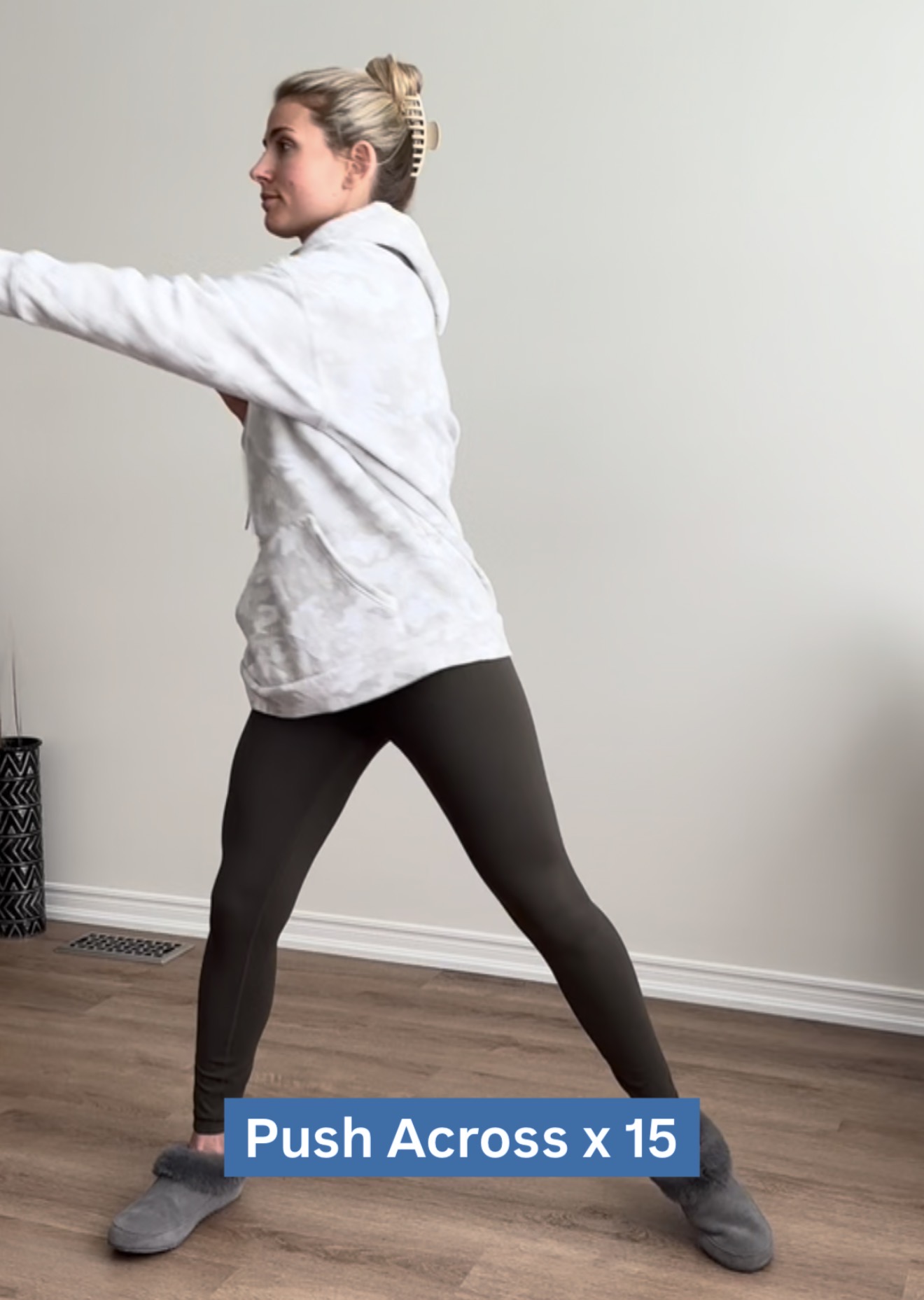
This movement brings in rotation and coordination, which are often limited when we’re sitting for long periods or moving less overall.
It’s inspired by Tai Chi patterns, where movement flows from one side of the body to the other.
To do it:
- Stand tall with a soft bend in your knees
- Gently rotate your torso as your arms move across your body
- Shift your weight slightly as you move from side to side
This helps:
- connect your upper and lower body
- encourage gentle spinal rotation
- support coordination and rhythm
There’s no need to rush. Let it feel fluid and natural.
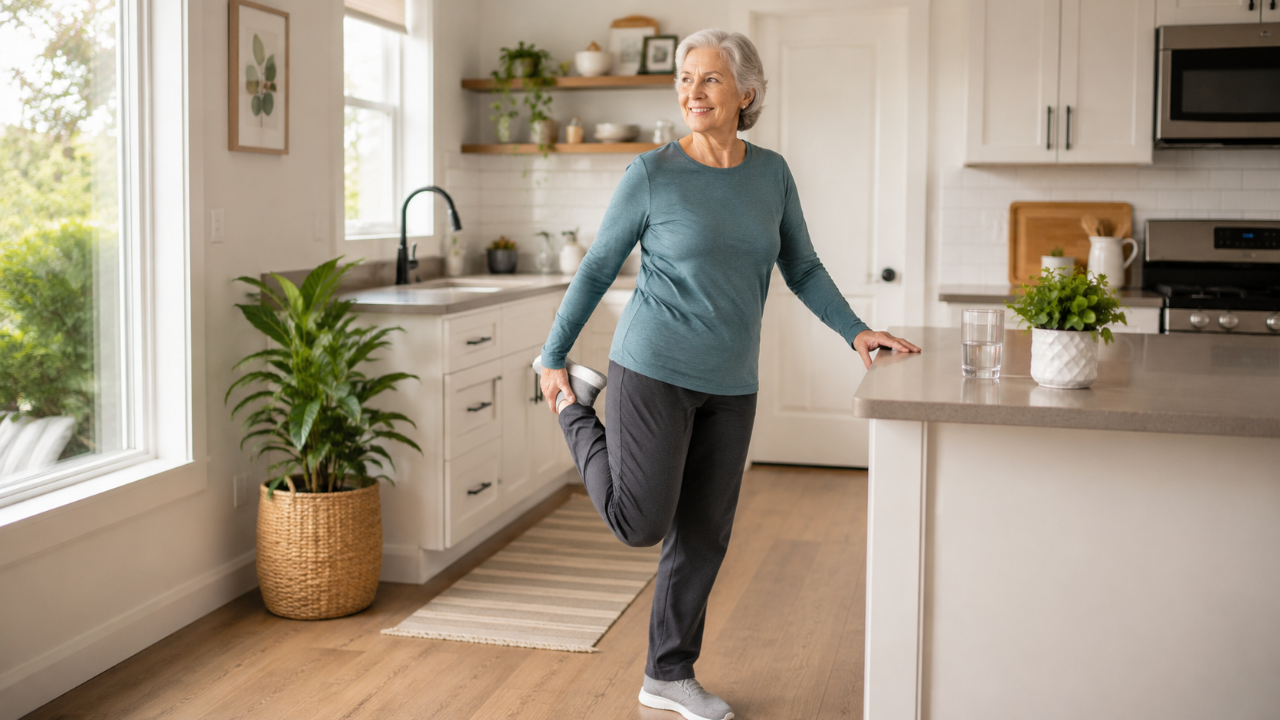
#3 Butt Kicks (Option to Use Support)
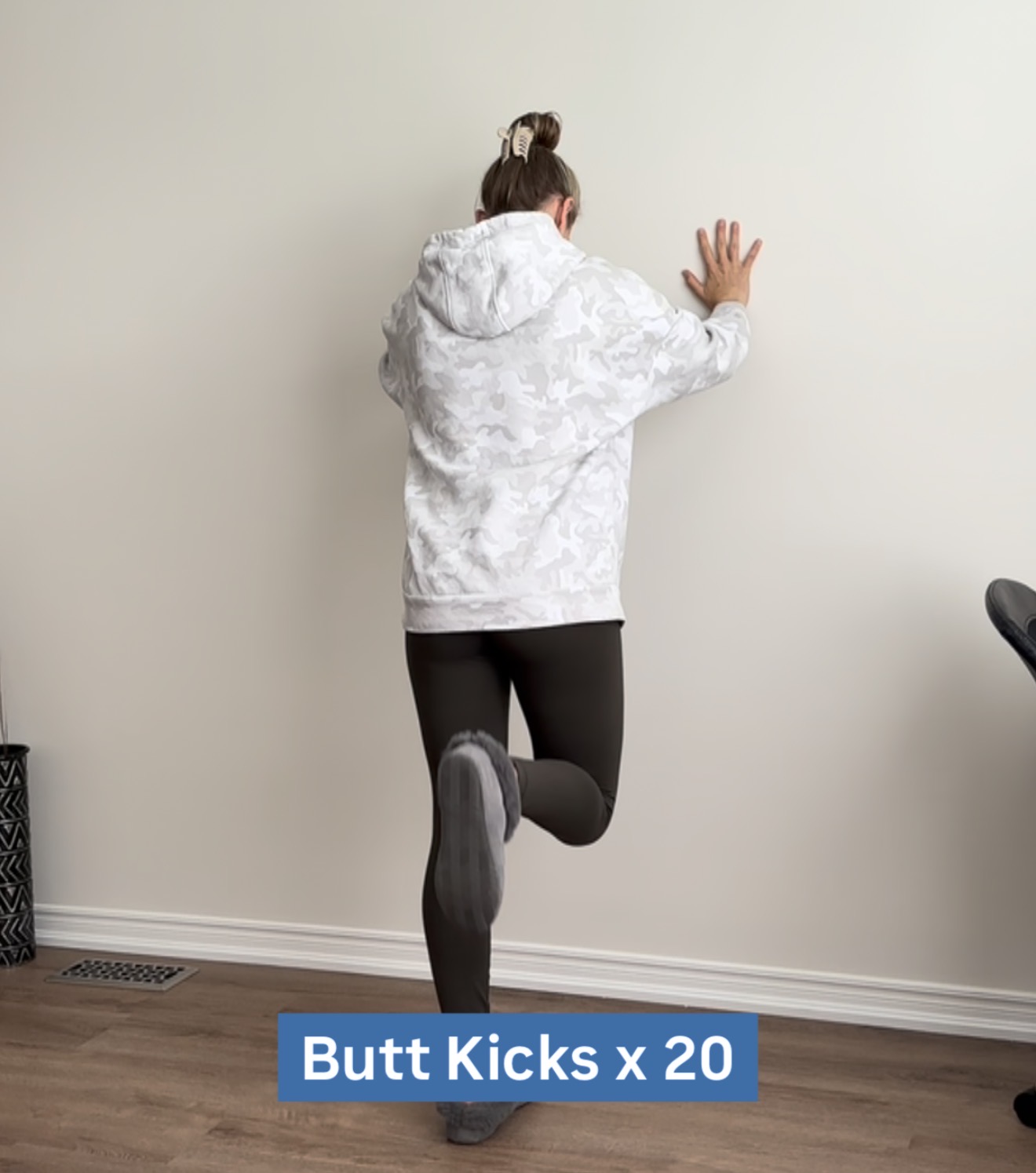
This is a simple way to bring back knee movement and circulation, especially if you’ve been sitting more than usual.
Using a wall or countertop:
- Stand tall and hold on for support
- Gently bring one heel toward your glutes
- Alternate sides at a comfortable pace
This helps:
- improve circulation through the legs
- reintroduce knee flexion
- lightly activate the muscles on the back of your legs
Keep it small and controlled. This isn’t about intensity—it’s about movement.
#4 Marching on the Spot with Arm Lift
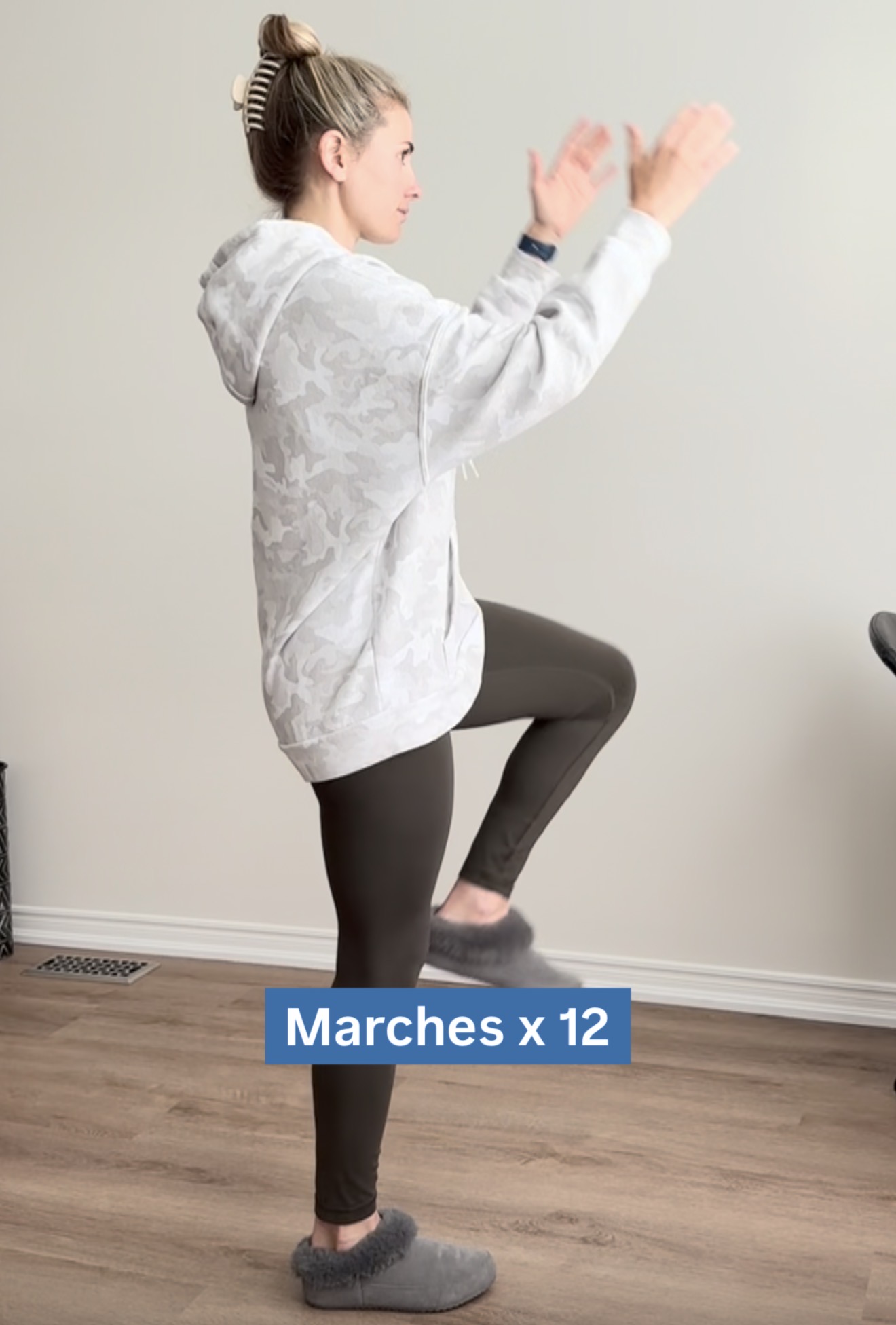
This is the closest pattern to walking.
You’re bringing back alternating limbs, rhythm, and light cardiovascular effort.
To do it:
- Stand tall with support if needed
- Lift one knee while raising the opposite arm
- Alternate sides in a steady, controlled rhythm
This helps:
- reinforce coordination between upper and lower body
- gently elevate heart rate
- recreate the natural pattern of walking
You can keep this slow and deliberate or build into a slightly more continuous rhythm if it feels good.
How to Use These Movements
This doesn’t need to be complicated.
You can:
- do all four movements in a short sequence
- pick one or two that feel best
- spread them throughout your day
Even 5 to 10 minutes is enough to make a difference.
A few things to keep in mind:
- Use support whenever you need it
- Move in a way that feels controlled and comfortable
- Focus on how your body responds, not how it looks
- Let consistency matter more than intensity
This is especially helpful if you’re in a season where your energy, time, or capacity is limited.
A Different Way to Think About Movement
It’s easy to fall into all-or-nothing thinking with exercise.
If you can’t get out for a walk, it can feel like you’re missing out entirely.
But your body doesn’t see it that way.
Your body responds to input—small, repeated signals over time.
A few minutes of intentional movement:
- helps maintain joint motion
- supports circulation
- keeps your nervous system engaged
- reinforces patterns your body relies on daily
It may not look like much, but physiologically, it adds up.
Final Thoughts
Walking is valuable. There’s no question about that.
But it’s not the only way to support your body.
If walking isn’t happening right now, that doesn’t mean you’ve fallen behind or that nothing “counts.”
You can still:
- move your joints
- shift your weight
- coordinate your body
- support circulation and regulation
In simple, accessible ways. Small, consistent movement still matters.
Follow along on Instagram, TikTok, Facebook and YouTube, or join the email list at the bottom of this page to get helpful wellness tips and tricks right into your inbox.