How to Stay Mobile As You Age (Without Overcomplicating It)
Why Posture and Mobility Matter More Than Aging Itself
When people think about aging, they often expect stiffness, weakness, or loss of mobility to just be part of the deal.
But in practice, that’s not usually what I see.
What I see, over and over again, is that it’s not age itself causing most of these changes. It’s how we’ve been using (or not using) our bodies over time.
Posture, movement habits, previous injuries, and long periods of inactivity tend to have a much bigger impact than the number of years someone has lived.
What’s Actually Changing Over Time
As we get older, our tissues do naturally lose some elasticity and strength. That part is normal.
But your body is also constantly adapting to what you do with it.
If you spend most of your day sitting, your body adapts to that position.
If you move in limited ranges, your joints and muscles start to expect only those ranges.
If you’ve had injuries, your body will often work around them rather than fully resolving them.
Over time, this creates patterns:
- certain areas become stiff and compressed
- others become weak or underused
- joints don’t move as evenly as they should
That’s when people start to feel things like:
- “tight hips”
- “a bad back”
- “poor posture”
Not because their body is failing, but because it has adapted really well… just not in a way that supports long-term function.
Why Posture Isn’t Just About “Standing Up Straight”
Posture gets simplified a lot, but it’s not just about looking upright.
It’s about how your body is organized when you’re sitting, standing, and moving.
When your body is more aligned:
- joints share load more evenly
- muscles don’t have to overwork to hold you up
- breathing mechanics are more efficient
- circulation and nerve flow aren’t being compressed
When posture is consistently off:
- certain areas take more stress than they should
- other areas stop contributing
- movement becomes less efficient and more effortful
And that’s where discomfort and limitation tend to build over time.
Why Exercise Alone Doesn’t Always Fix It
A lot of people try to solve this by just “working out more.”
But adding strength on top of imbalance doesn’t always help.
If your body is already compensating:
- you might reinforce the same patterns
- you might feel stronger, but still stiff or uncomfortable
- you might avoid certain movements without realizing it
This is why some people stay active but still feel restricted.
It’s not that exercise is wrong. It’s that it needs to include awareness of how your body is moving, not just how much you’re doing.
What Actually Helps (Simple, Tangible Shifts)
This doesn’t need to be complicated. Small, consistent changes go a long way.
Here are a few places to start:
- Change positions more often
Try not to stay in one position for hours at a time. Even small adjustments throughout the day help reduce buildup of stiffness. - Move joints through their full (comfortable) range
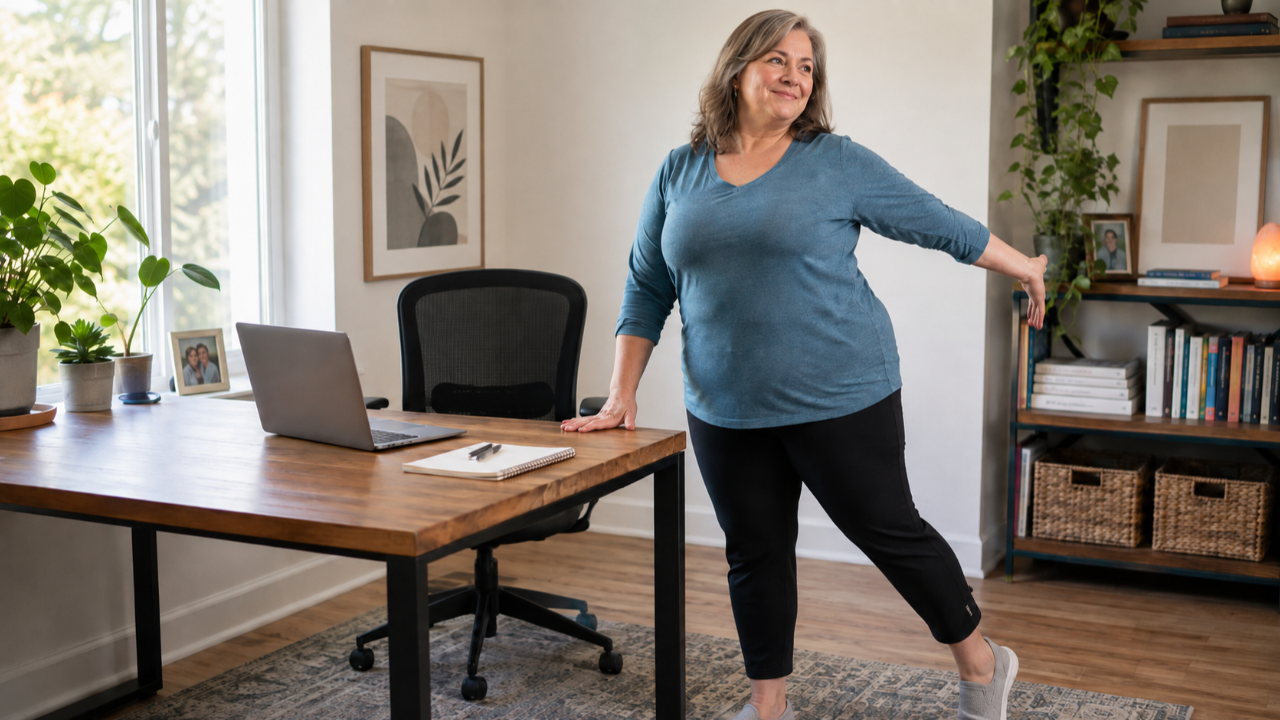
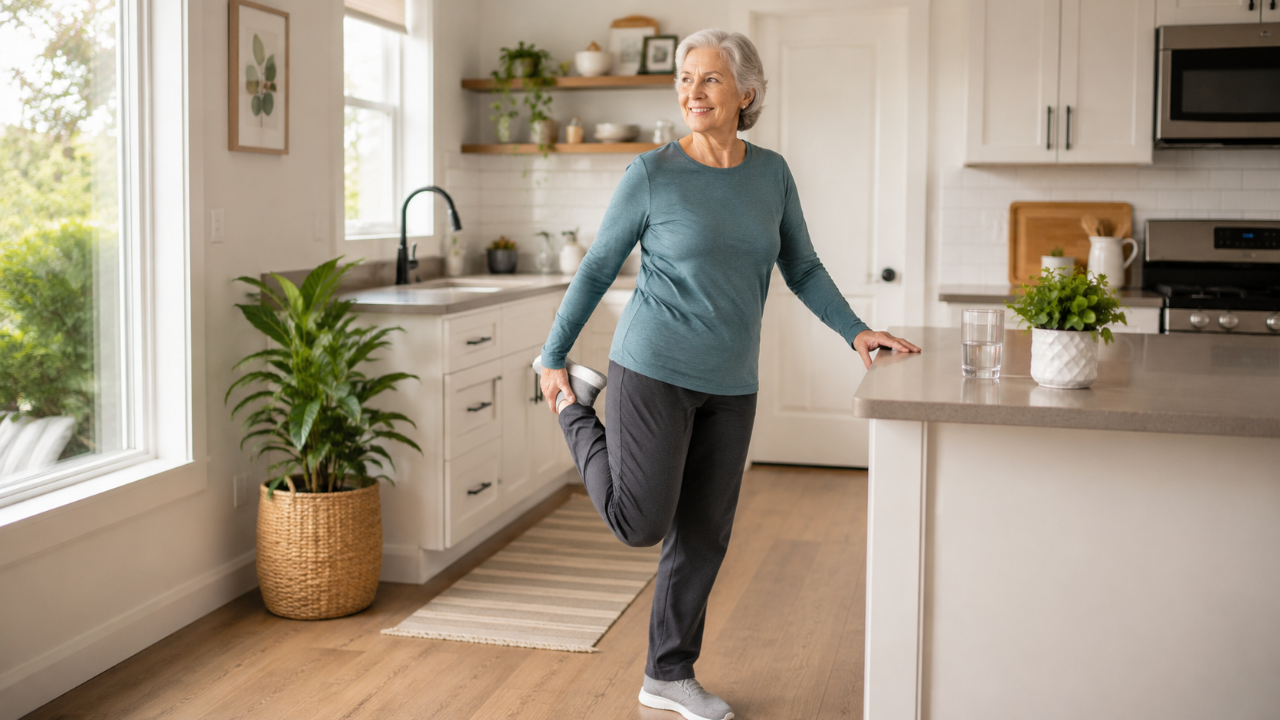
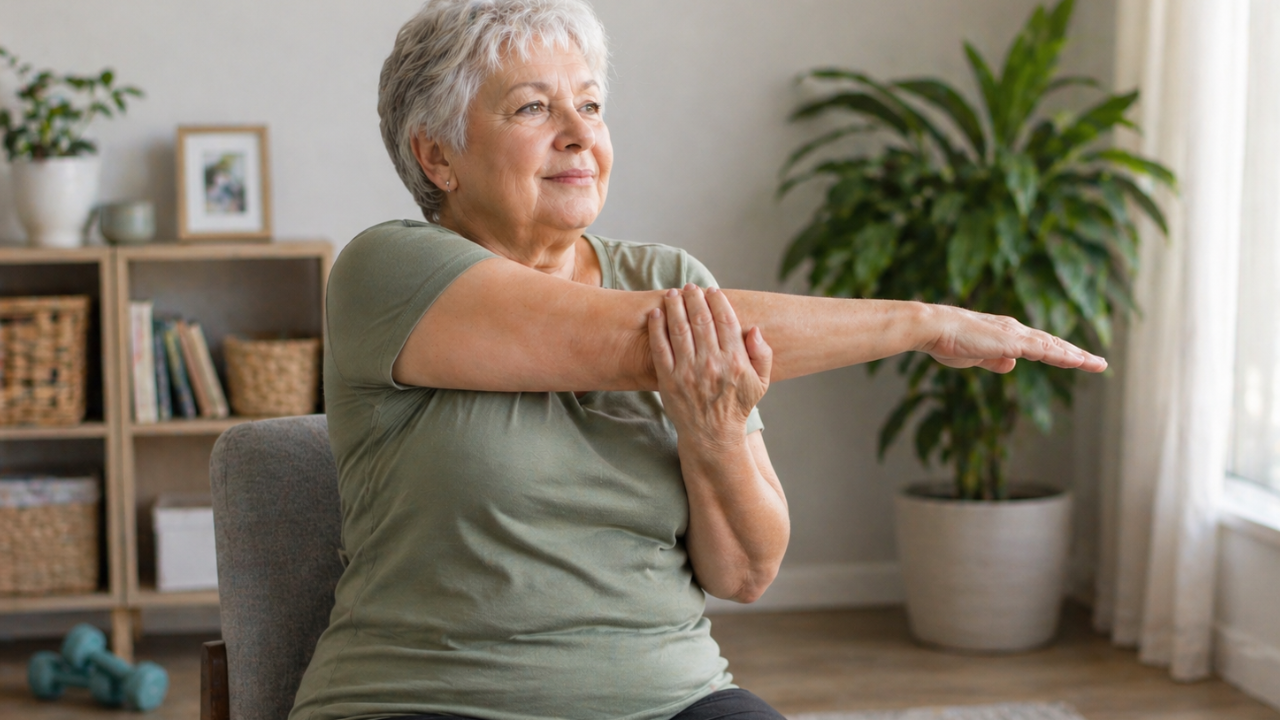
Gentle movements like arm circles, spinal rotation, and hip mobility help maintain options in your body. - Use support when you need it
Chairs, walls, or counters aren’t a step backward. They help you move better and with more control. - Slow things down
Rushing through movement often reinforces compensation. Slower movement helps you feel what’s actually happening. - Pay attention to how things feel
Not every movement should feel hard. You’re looking for ease, control, and gradual improvement, not forcing range.
A Different Way to Think About Aging
The people who tend to move well as they get older aren’t necessarily doing extreme workouts.
They’re usually doing simple things consistently:
- moving regularly
- maintaining joint mobility
- keeping some level of strength
- staying aware of how their body feels
They don’t rely on intensity. They rely on consistency and variety in movement.
Where to Go From Here
If your body feels stiff, tight, or unfamiliar, that doesn’t mean it’s too late or that something is wrong.
It usually just means your body needs more movement, in a way that it can actually tolerate and build from.
That’s exactly why I created Inclusive Movement.
The goal isn’t to push harder or do more. It’s to help you move in a way that:
- supports your structure
- improves mobility and strength together
- and feels approachable enough to stay consistent with
You don’t need perfect posture or long workouts.
You just need to start giving your body more of what it’s been missing.
Follow along on Instagram, TikTok, and YouTube, or join the email list at the bottom of this page to get helpful wellness tips and tricks right into your inbox.