Some of the Healthiest Things I Do Don’t Look Impressive at All
Some of the healthiest things I do right now do not look impressive at all.
They do not look like intense workouts, perfectly planned meals, long morning routines, or a life that is neatly organized around wellness.
They look more like walking when I can, taking the stairs when it makes sense, repeating simple meals, going to bed instead of finishing one more task, and choosing the habit that lowers the mental load instead of the one that looks best from the outside.
And I think this is something we need to talk about more.
Because health habits change with life. They are supposed to.
What worked in one stage may not work in another. What felt realistic before babies, before a busy work schedule, before caregiving, before pain, before stress, before hormonal changes, or before a major life transition may not be the thing that fits anymore.
That does not mean you have failed. It may simply mean your life has changed, and your habits need to change with it.
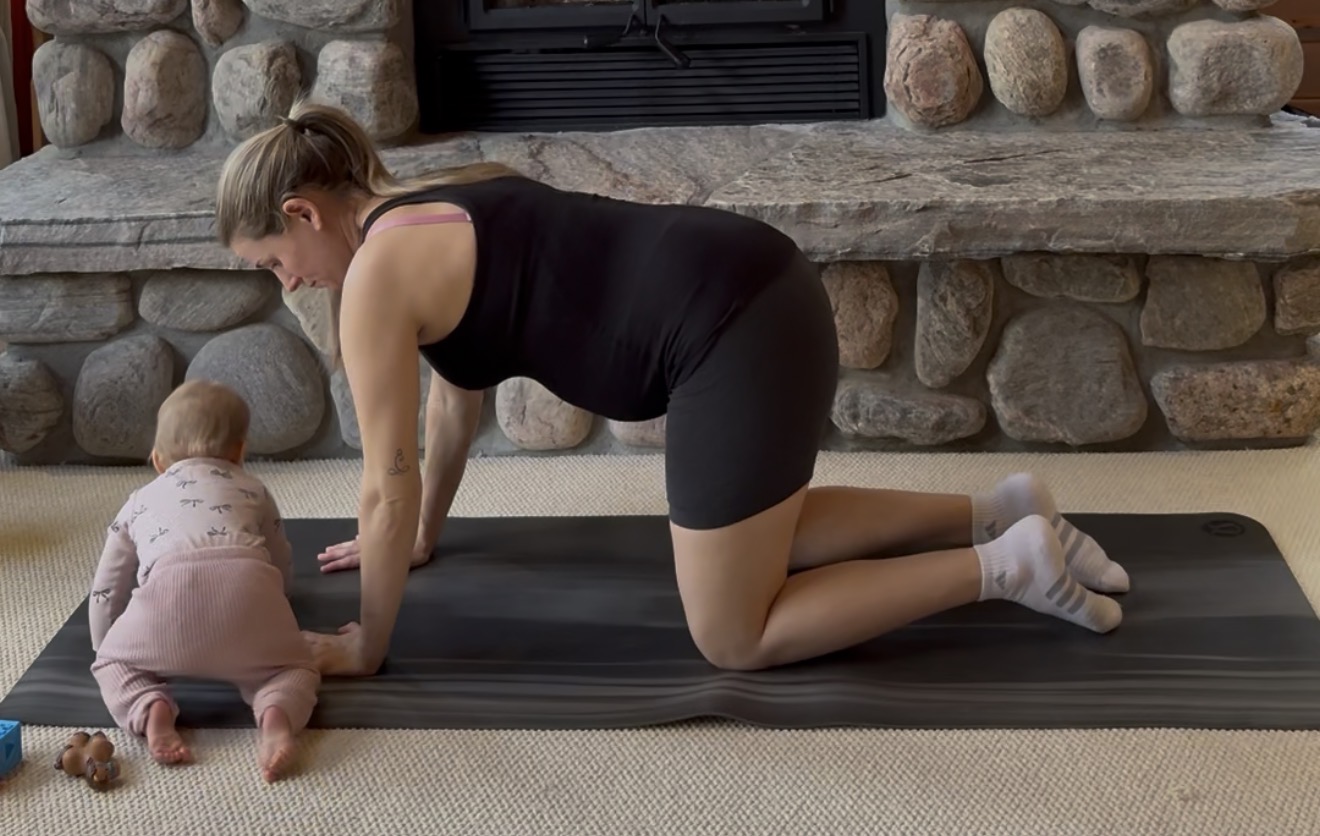
For me, I have not done an impressive-looking workout in about three years. Two pregnancies are definitely part of that, but even still, I have been leaning more toward walks, adding steps and stairs into my day, carrying the baby, getting outside when I can, and choosing movement that actually fits into my life right now.
That might not look like much from the outside, but it counts.
There is actually a term that helps explain part of this: non-exercise activity thermogenesis, often called NEAT. NEAT refers to the energy we use for daily movement that is not sleeping, eating, or structured exercise. It includes things like walking around the house, climbing stairs, standing, doing chores, carrying groceries, and generally staying active throughout the day.
In other words, movement still matters even when it does not look like a workout.
This is something many people accidentally dismiss. We tend to think movement only counts if it happens in workout clothes, in a gym, with a plan, for a certain number of minutes, or with a certain level of intensity. But our bodies are also affected by the way we live, move, sit, stand, carry, reach, rest, and recover all day long.
A walk counts. Taking the stairs counts. A short mobility session counts. Repeating a basic routine counts. Choosing movement that keeps you connected to your body during a full stage of life counts.
This is especially important if you are a beginner, a busy parent, an older adult, or someone who has been away from exercise for a while. The goal is not always to jump into the most structured or ambitious version of health. Sometimes the goal is to rebuild trust with your body through habits that feel approachable enough to repeat.
And repetition is a big part of why simple habits work.
A basic breakfast you repeat most mornings might not feel exciting, but it reduces the number of decisions you have to make. A simple meal rotation might not feel creative, but it may help you eat more consistently. A familiar workout might not feel impressive, but it gives your body a chance to learn the movements instead of constantly starting over.
Our meals are kind of the same right now. A lot of them are boring and repetitive, but that is what helps us stay consistent. When I try to make every meal exciting or constantly try new recipes, it becomes overwhelming. Then we are more likely to end up with nothing healthy ready at all.
So right now, simple is working.
That does not mean eating the exact same foods forever is the goal. Variety matters. Enjoyment matters. Nutrients matter. But there is a difference between a simple meal rotation and being rigid with food.
For many families, simple meals are the difference between having a realistic system and constantly feeling behind.
You do not need to reinvent dinner every night to be healthy. You do not need every lunch to be interesting. You do not need to prove that you are committed to wellness by making food more complicated than your life can currently handle.
Sometimes the healthiest meal is the one you can actually repeat.
The same concept applies to sleep. Going to bed instead of finishing one more task is not exciting. It does not make a good progress photo. It probably will not feel like a major health decision in the moment.
But when you are tired, everything can feel harder.
Movement feels harder. Meal planning feels harder. Patience feels harder. Motivation feels harder. Making healthy choices feels harder.
So sometimes the most productive thing you can do is stop trying to squeeze one more thing into the day and let your body recover.
Stress is similar.
We often think of health as adding more: more workouts, more supplements, more routines, more tracking, more goals. But sometimes health is subtracting something.
Saying no to one extra commitment might be more helpful than forcing in another wellness habit your body and mind do not have capacity for.
That can be hard to accept, especially in motherhood or busy family life, where there is often pressure to be everything to everyone. But there are stages of life where the healthiest choice is the one that lowers the mental load.
This does not mean we abandon our health. It means we stop measuring health only by what looks impressive.
There are times in life when your habits may look more structured. You may have the energy for longer workouts, more meal variety, strength progressions, classes, routines, and bigger goals.
There are also times when your habits may become smaller, simpler, quieter, and more repetitive.
Both can be healthy.
The problem is when we compare the habits from one stage of life to the habits from another and decide that anything less intense is not worth doing.
Your body responds to consistency. It responds to circulation, muscle activation, joint movement, sleep, food, hydration, stress regulation, and recovery. It does not need every habit to be dramatic. It needs enough support, repeated often enough, in a way your real life can actually hold.
That is why I think simple health habits are so underrated.
Movement can be simple. Food can be simple. Rest can be simple. Health can be simple.
Simple does not mean ineffective.
Simple often means repeatable.
And repeatable is where a lot of progress comes from.
So if your healthy habits look boring right now, that is okay.
If your workouts look more like walking, stretching, stairs, housework, baby-carrying, or a short beginner routine, that still matters.
If your meals are basic and repetitive, that may be the exact structure helping you stay consistent.
If your biggest health win this week is going to bed earlier, taking something off your plate, or choosing a habit that makes life feel less overwhelming, that counts too.
Not everything healthy needs to look like a transformation.
Sometimes health looks like doing what fits, repeating what works, and trusting that small, steady habits are still meaningful.
And in some stages of life, those unimpressive-looking habits may be the very things keeping you well.