What a True Beginner Workout Actually Looks Like
A lot of workouts labeled “beginner” online are not actually designed for true beginners.
They are often fast-paced, overly complicated, exhausting, or built for people who already have a foundation of strength, balance, coordination, and exercise experience. For someone returning to movement after years away, dealing with pain or stiffness, postpartum recovery, fatigue, aging, or simply a lack of confidence with exercise, those workouts can feel discouraging pretty quickly.
As an osteopath, one of the biggest things I notice is that many people are not starting from a place where they need to push harder. They are starting from a place where their body needs to gradually become comfortable with movement again.
That changes the approach completely.
A true beginner workout is usually much simpler than people expect. It is less about intensity and more about creating movement that the body can tolerate, repeat consistently, and slowly build from over time.
From an osteopathic perspective, movement affects far more than muscles alone. Regular movement influences circulation, joint mobility, breathing mechanics, lymphatic flow, coordination, posture, and nervous system regulation. The body adapts to what it does repeatedly, and many people today spend large portions of the day sitting, bracing, rushing, or staying in the same positions for hours at a time.
Over time, that lack of movement variability can contribute to stiffness, reduced mobility, tension, shallow breathing patterns, fatigue, and a general feeling of being disconnected from the body.
This is why true beginner exercise often needs to focus less on “burning calories” and more on simply helping the body move well again.
Why Many Beginner Workouts Feel So Intimidating
A lot of people assume they are simply bad at exercise because they struggle to keep up with beginner programs online. But often the issue is not the person. It is the entry point.
Many programs marketed toward beginners still include fast transitions, balance-heavy exercises, floor work, jumping, complicated combinations, or workout structures that leave people feeling behind almost immediately. For someone dealing with joint stiffness, chronic pain, fatigue, postpartum recovery, or years of inactivity, that can make exercise feel stressful instead of supportive.
And from a physiological perspective, when movement feels stressful or unpredictable, the body often responds protectively. People tend to hold tension without realizing it, breathe more shallowly, rush through exercises, and focus more on simply getting through the workout than actually moving well.
Over time, this can create a frustrating cycle where exercise feels intimidating before a person even begins.
A true beginner workout should lower that barrier, not raise it.
The Value of Repeating Simple Movements
One thing I talk about often with patients and members is the value of repetition.
There is a common belief in fitness that workouts always need to be new, more advanced, or constantly changing to be effective. But for beginners, repeating simple movement patterns is often incredibly helpful.
When movements become familiar, the body becomes more efficient with them. Coordination improves. Balance improves. People often move with less hesitation and less unnecessary tension because the nervous system no longer treats those movements as unfamiliar or stressful.
We expect this concept with almost every other skill in life. If someone was learning piano or a new language, we would not expect them to constantly start over with completely different material every day. Movement works similarly. Repeating exercises gives the body and nervous system a chance to become more comfortable and efficient with those patterns over time.
This is one reason simpler exercise programs are often more sustainable for beginners. They reduce mental overload and allow people to actually pay attention to how their body feels and moves.
Movement Is About More Than Fitness
One of the reasons I approach beginner exercise differently through an osteopathic lens is because movement impacts so many systems throughout the body.
Movement is not just about calories or aesthetics.
Gentle muscular contractions help support circulation and lymphatic flow. Joint movement helps nourish surrounding tissues. Changes in position influence posture, breathing mechanics, and overall mobility throughout the body.
This is part of why many people notice they feel less stiff, more energized, or more mobile after consistent movement, even before major fitness changes occur.
The body generally responds well to regular, manageable input.
And for many beginners, slower-paced movement is often what allows that consistency to happen.
When movements are slowed down, people tend to breathe better, notice areas of tension more easily, and become more aware of positioning and coordination. Slower-paced movement is often misunderstood as less effective, but for beginners it is usually what allows people to build awareness, confidence, and consistency without feeling overwhelmed.
That does not make beginner exercise ineffective. The focus is simply different.
Beginner Progress Often Looks Different Than Expected
A lot of people expect progress to feel dramatic right away. But for beginners, some of the earliest changes are often much more subtle and practical.
It may look like:
-
feeling steadier walking stairs
-
getting up from the floor more comfortably
-
carrying groceries with less strain
-
having less stiffness after sitting
-
improving balance
-
feeling less tension through the neck and shoulders
-
recovering more easily from daily tasks
These changes may sound small, but they are often the exact things that help people feel more capable and comfortable in everyday life.
And in many cases, these early improvements are what help people continue building consistency with movement long term.
This is especially important for older adults, postpartum women, or people returning to exercise after pain or injury. If progress is only measured by intensity, soreness, or aesthetics, people often miss the important foundational changes happening underneath the surface.
A Good Beginner Workout Should Feel Sustainable
One of the biggest misconceptions in fitness is that exercise always needs to feel punishing to be effective.
In reality, the people who tend to move well long term are often not the people doing the most extreme workouts. They are the people finding forms of movement they can continue returning to consistently through different seasons of life.
A true beginner workout should feel approachable enough that someone can realistically repeat it several times per week.
That might mean:
-
shorter workouts
-
slower pacing
-
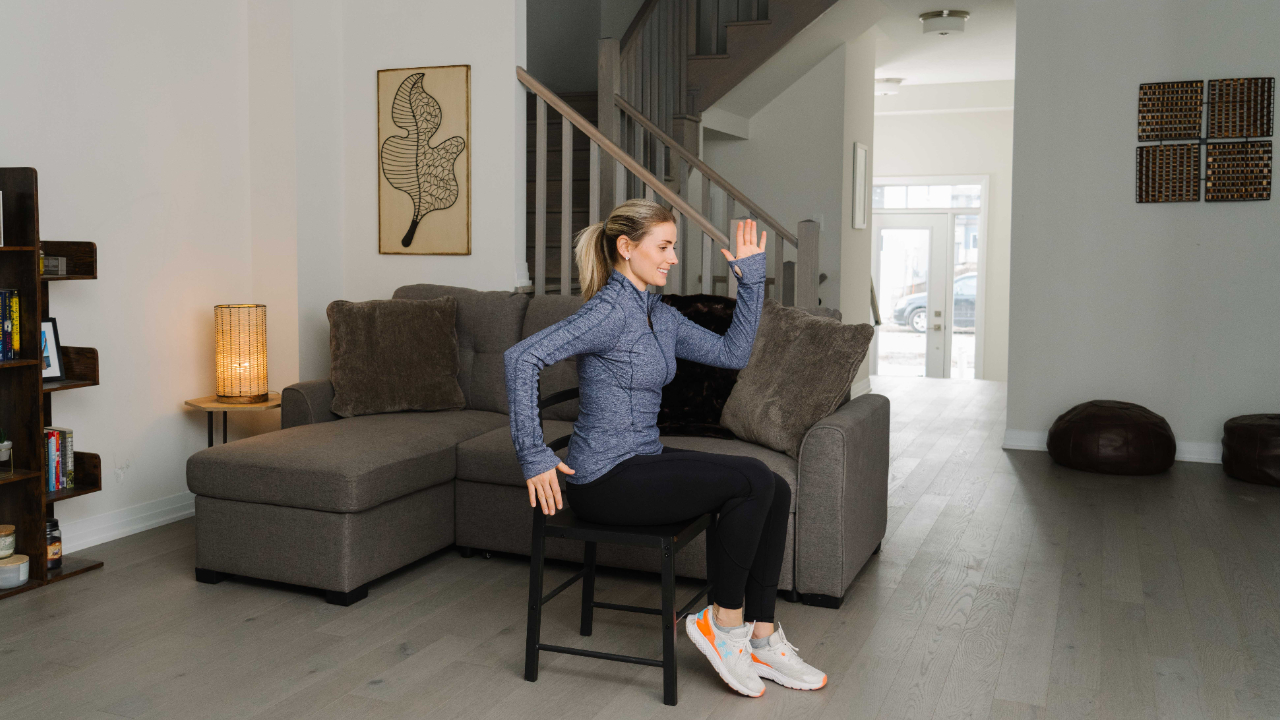
chair support
-
lower-impact movements
-
more rest breaks
-
mobility-focused exercises
-
simple movement patterns
For many beginners, the goal at first is not maximizing performance. It is improving mobility, coordination, movement tolerance, confidence, and overall comfort with movement again. Strength and endurance can gradually build from there over time.
I think more people would stay consistent with exercise if they understood that beginner movement is supposed to feel supportive. You do not need to feel exhausted after every workout for it to be beneficial.
In many cases, the most effective starting point is simply finding movement that feels manageable enough to continue returning to regularly.
Follow along on Instagram, TikTok, Facebook and YouTube, or join the email list at the bottom of this page to get helpful wellness tips and tricks right into your inbox.