Exercising With Pain or Past Injuries: How to Start Safely
As an osteopath and fitness professional, I have worked with many people who hesitate to exercise because of past injuries, current pain, stiffness, surgery, flare-ups, or a body that feels unpredictable and I understand why.
When your body has given you a reason to be cautious, movement can start to feel complicated. You may want to be more active, but you are also trying to figure out what is actually safe. You might wonder if the wrong exercise could make things worse, if a certain stretch is okay, or if soreness afterward means you pushed too far.
That hesitation is not something to ignore. It is often your body and nervous system trying to protect you.
But over time, avoiding movement completely can create its own problems. The body can become stiffer, weaker, more guarded, and less confident with everyday activities. This is why the answer is usually not to stop moving altogether, but it is also not to force your way through workouts that feel too intense.
There is a better middle ground. The right kind of exercise can help you rebuild strength, mobility, circulation, confidence, and trust in your body. The key is choosing movement that meets you where you are instead of where you think you “should” be.
Understanding the Hesitation
When you have experienced pain or injury, your body often learns to move differently.
You may start bracing without realizing it. You may hold your breath during certain movements. You may avoid bending, reaching, twisting, squatting, or loading one side of your body. You may also become more aware of every little sensation, which can make exercise feel stressful before you even begin.
This protective response makes sense. Your body is trying to keep you safe. The problem is that if this guarded pattern continues for too long, it can start to limit how freely you move. Muscles may become tense or underused. Joints may lose some of their natural range. Your balance, coordination, and confidence can begin to change.
This is why exercise after pain or injury has to be approached carefully, but not fearfully.
You do not need to jump into intense workouts or prove anything to your body. You simply need to begin with movement that feels safe enough to repeat.
Starting Slow: The Foundation of Safe Exercise
When you are starting again after pain, injury, or a long break, slower and simpler is often better.
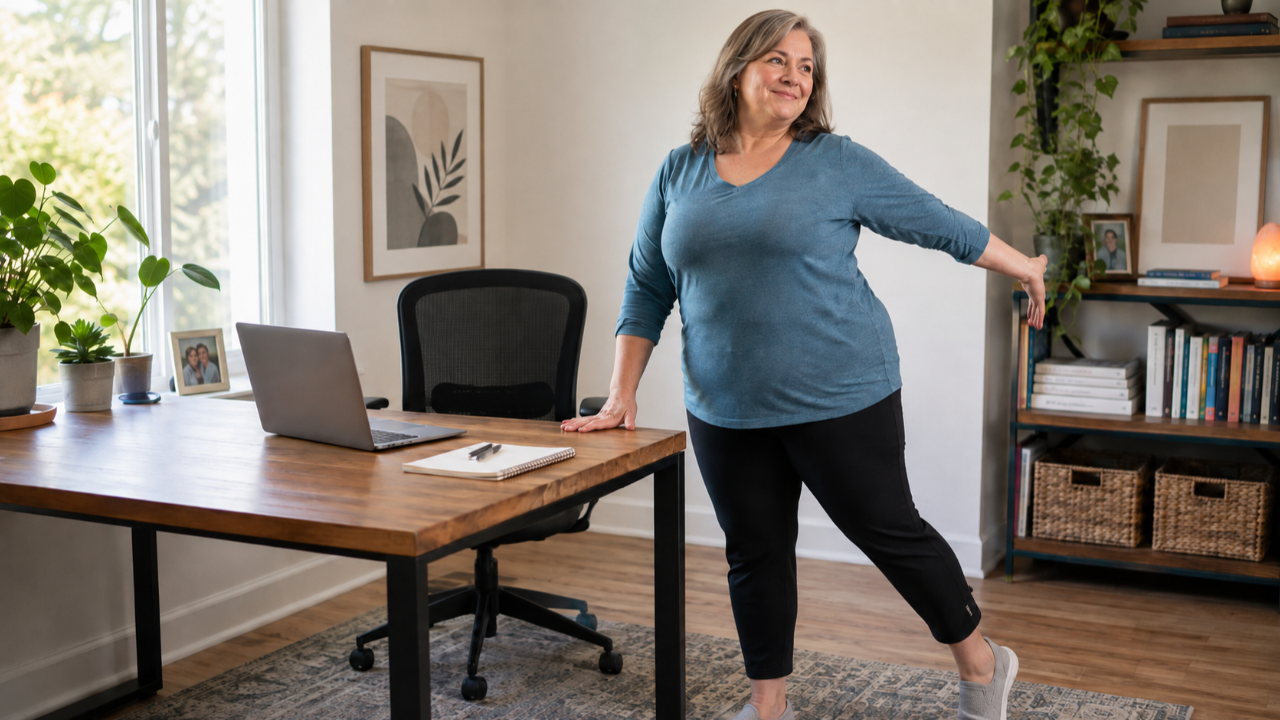
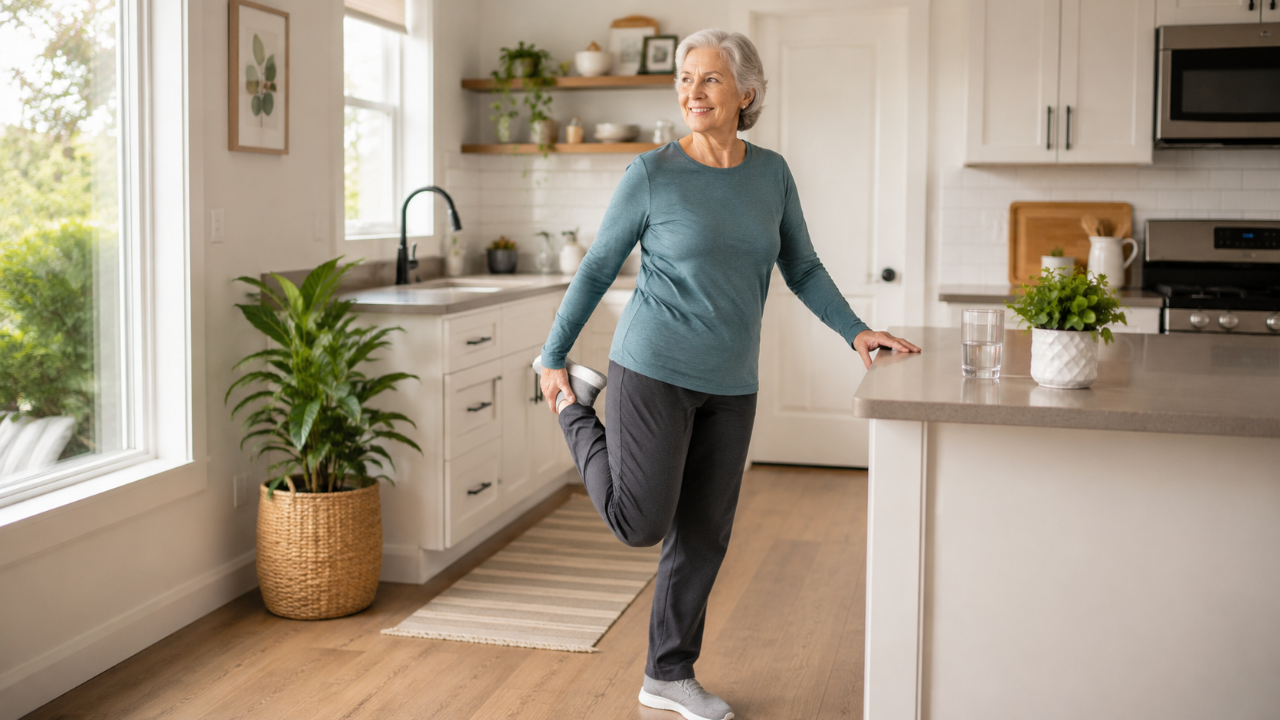
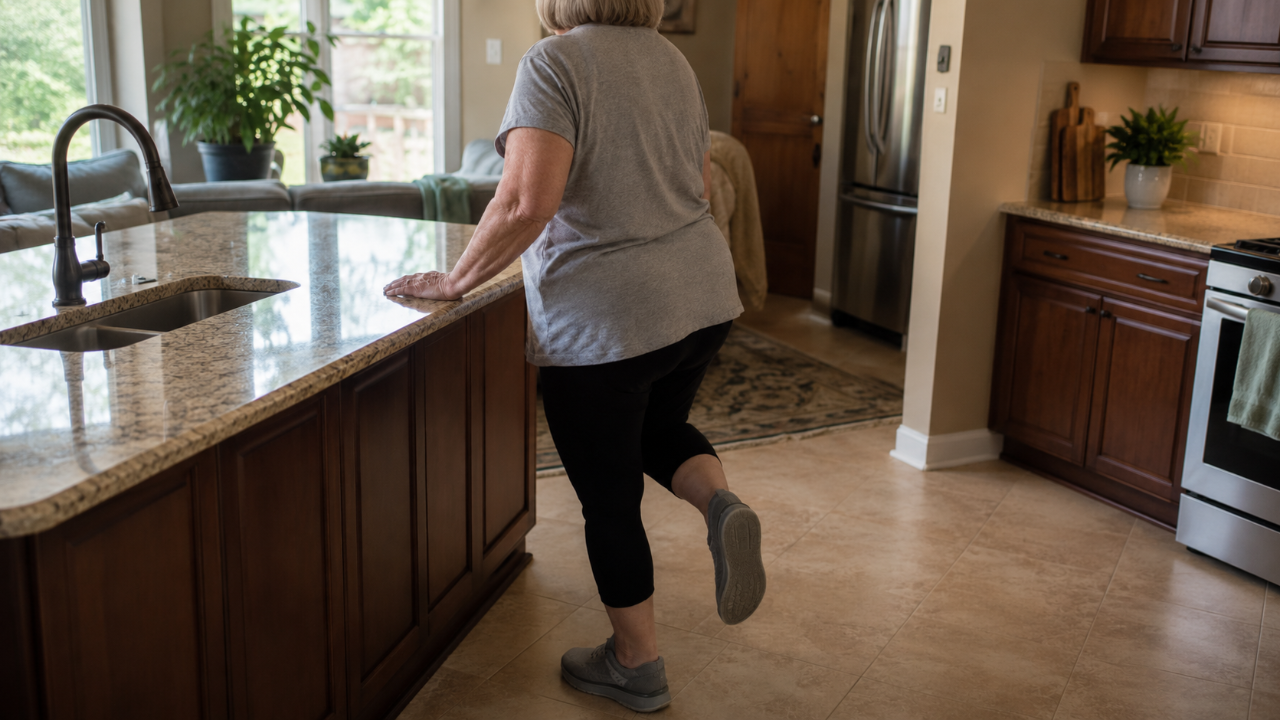
A supported squat to a chair may be more useful than forcing a deep squat. A seated spinal rotation may be more realistic than a floor-based mobility routine. Holding onto a counter for balance does not make an exercise less valuable. It can make the movement more accessible, more controlled, and easier to repeat consistently.
This is especially important when your body already feels guarded.
If you choose a workout that is too fast, too intense, or too complicated, your body may respond with more tension. You might push through the session, but feel worse later. That can reinforce the idea that exercise is unsafe, even when the real issue was that the starting point was too aggressive.
Starting slow gives your body a chance to adapt. It gives your nervous system a chance to learn that movement does not always mean pain, exhaustion, or a flare-up afterward. It also gives you time to notice what your body tolerates well, which is an important part of building confidence again.
Establishing a Routine: Consistency Over Intensity
One of the most helpful things you can do when returning to exercise is focus less on intensity and more on consistency. A short routine that you can repeat regularly is often more useful than one difficult workout that leaves you sore, frustrated, or nervous to try again.
For many people, this might mean starting with ten minutes of gentle movement, choosing a seated routine, or repeating the same low-impact workout a few times per week until the body starts to feel more familiar with it. That might sound boring or unimpressive, but repetition is often exactly what helps.
Your body adapts through repeated exposure. Your muscles, joints, coordination, balance, and nervous system all respond to patterns that are practiced consistently. When movement feels predictable and manageable, it becomes easier to build from there.
The goal at the beginning is not to do everything. The goal is to create a routine your body can recover from, trust, and repeat.
Choosing Full-Body Movement
When something hurts, it is natural to focus only on that area (a sore back, a cranky knee, tight hips, a stiff neck, shoulder that does not feel right), but the body does not work in isolated pieces.
Your hips can affect your back. Your ribcage and breathing mechanics can influence your neck and shoulders. Your feet and ankles can change how your knees and hips load. Your posture, circulation, strength, balance, coordination, and nervous system all influence how movement feels.
This is one reason I often recommend full-body, low-impact movement for people who are starting again. The goal is not to overwhelm the body with complicated exercises. It is to gently remind the body how to move as a connected system.
A simple routine that moves the spine, hips, shoulders, ankles, and breath can help your whole body feel less stuck. It can support joint mobility, circulation, balance, coordination, and body awareness. It can also help you stop focusing only on the painful area and start noticing how the rest of the body contributes.
This is where gentle, holistic movement can be so valuable. It gives the body a chance to move, adapt, and build confidence without forcing one specific area to do all the work.
Here’s a quick and gentle mobility routine you can try at home.
The Inclusive Movement Approach
At Inclusive Movement, our programs are designed with this type of person in mind.
Not everyone feels comfortable with high-impact workouts. Not everyone wants to get on and off the floor. Not everyone feels confident following fast-paced exercise classes. And not everyone is starting from a place where traditional fitness programs feel realistic.
That does not mean exercise is not for them, it means exercise needs to be taught in a way that includes them.
Our approach focuses on low-impact movement, guided instruction, mobility, strength, balance, posture, and coordination. We include seated options, standing options, supported exercises, and modifications so people can choose what works for their body that day.
Sometimes the best version of an exercise is the one that allows you to move without fear. Using a chair, wall, or counter can be exactly what makes a movement effective because it helps you stay steady, relaxed, and consistent. The modified version is not always a step down. Often, it is the version that helps you keep going and consistency is what creates change over time.
Overcoming the Mental Hurdle
The physical side of exercise matters, but the mental side matters too.
If you have been hurt before, felt pain during movement, or tried workouts that felt too difficult, your brain may start associating exercise with risk. This can make it harder to start, even when you know movement would probably help. That is why rebuilding confidence has to be part of the process.
Confidence does not usually come from one big workout. It comes from small, repeated experiences that teach your body it can move safely again. Maybe that means finishing a short routine and realizing your body handled it better than expected. Maybe it means using a chair for support and noticing that the movement feels steadier and less stressful. Over time, those small experiences can start to change the way you think about exercise.
Instead of movement feeling like something you have to protect yourself from, it can slowly become something that helps you feel more capable again.
Embracing a New Perspective on Exercise
If pain or past injury has made you nervous to exercise, it may help to think about movement differently.
Exercise does not have to be about pushing harder, sweating more, or doing the most challenging version of every movement. For many people, especially after pain or injury, movement is more useful when it helps the body feel less stiff, more coordinated, and a little more capable in daily life.
That might look like improving joint mobility, supporting circulation, building strength gradually, feeling steadier on your feet, or simply noticing that everyday tasks feel a bit easier. Those are all meaningful outcomes, even if the workout itself looks simple.
You do not have to wait until your body feels perfect to begin. You also do not have to push through workouts that make you feel worse. You can start smaller, modify when needed, use support, repeat the basics, and choose movement that helps you feel more connected to your body instead of more afraid of it.
Follow along on Instagram, TikTok, Facebook and YouTube, or join the email list at the bottom of this page to get helpful wellness tips and tricks right into your inbox.