What Older Adults Should Be Doing Daily to Stay Mobile, Strong, and Independent
If getting up from a chair feels harder than it used to, if walking feels less steady, if your body feels stiff first thing in the morning, or if stairs suddenly feel more demanding than they once did, this is for you.
These changes can feel frustrating, especially when they start to affect your confidence with everyday life. A lot of people assume this means they are simply “getting old,” and while aging is a natural process, that does not mean we have no influence over how our body functions as we age.
The body is going to change over time. Muscle mass can decrease. Joints may feel less mobile. Balance may feel less automatic. Recovery can take longer. Daily activities that used to feel simple may start to require more effort or more thought.
But movement is one of the most practical ways we can support the body through those changes.
When I talk about daily movement for older adults, I am not talking about intense workouts or complicated exercise programs. I am talking about giving the body regular input so it can continue practicing the things that matter most: standing, walking, reaching, turning, balancing, breathing, climbing stairs, and moving through the day with more confidence.
The body functions as one connected system. Your joints, muscles, circulation, breathing mechanics, balance systems, and nervous system are all constantly communicating. When we move regularly, we are doing more than “working muscles.” We are helping those systems continue to do their jobs.
Current movement guidelines for adults 65 and older recommend a combination of physical activity, strengthening, balance-based movement, light activity throughout the day, and breaking up long periods of sitting. That lines up with what I see often in practice and movement education. Healthy aging is rarely supported by one type of exercise alone.
Walking is helpful. It supports circulation, endurance, mood, and general health. But if walking is the only form of movement someone is doing, there may still be important pieces missing.
A well-rounded daily movement routine should touch the whole body. Each area plays a role in how we walk, balance, breathe, reach, bend, and move through daily life.
Start With Spinal Movement
The spine is involved in almost everything we do.
Turning your head to check your surroundings, reaching into a cupboard, getting dressed, walking with a natural arm swing, breathing deeply, and feeling steady on your feet all involve movement through the spine, ribs, and trunk.
As people age, daily movement can become more repetitive. Many people spend more time sitting, driving, looking down, leaning forward, or moving within a smaller range. Over time, the spine and ribs may start to feel stiff or restricted.
That does not mean you need aggressive stretching. Gentle movement is often a very useful place to start.
The goal is simply to remind the body that the spine is meant to move in more than one direction. Bending, reaching, rotating, extending, and breathing with awareness can all help reduce the feeling that the body is stuck in one position.
From a whole-body perspective, this matters because the spine and ribcage are closely connected to breathing mechanics, posture, shoulder motion, and walking. If the upper back and ribs are stiff, it can affect how freely the arms swing, how well the ribs expand with breath, and how comfortable the neck and shoulders feel.
A few minutes of gentle spinal movement can be a simple way to reduce that stiff, guarded feeling and help the body feel more prepared for the rest of the day.
Keep the Hips and Ankles Moving
If you want to maintain walking ability, balance, and independence, the hips and ankles need regular attention.
The hips help you step, climb stairs, stand from a chair, shift your weight, and stabilize your pelvis. The ankles help you adjust to the ground, push off when walking, recover your balance, and move with more confidence.
When the hips or ankles become stiff, the body often finds ways to compensate. Steps may become shorter. Walking may feel heavier. Stairs may feel harder. Balance may feel less reliable. The knees, low back, or feet may start taking on more strain.
This is especially important for people who sit for long periods of time. Sitting keeps the hips in a shortened position and limits how much the ankles, calves, and feet have to work. When the body has been still for too long, it often feels stiff, heavy, and less responsive when you finally get up to move.
The point is to keep these joints involved. The hips and ankles are constantly helping the body respond to the ground, shift weight, and move from one position to another. When they are moved regularly, the body has more options.
Build Strength That Looks Like Real Life
Strength training can sound intimidating, but it does not have to mean lifting heavy weights or doing intense gym workouts.
For older adults, strength is often very practical.
Strength is being able to get up from a chair without using as much momentum. It is being able to climb stairs. It is carrying groceries. It is getting in and out of the car. It is standing at the counter to prepare a meal. It is feeling steady when you step onto a curb.
Research on resistance training in older adults has shown benefits for muscle strength and functional exercise capacity. This matters in a very practical way. Strength helps with standing from a chair, climbing stairs, carrying groceries, and feeling more capable during everyday tasks.
This is why I like to think of strength as something that should connect back to function.
Standing up from a chair is a daily life skill. Pushing through the arms, rising from a seated position, controlling the body on stairs, and carrying light loads are all examples of strength showing up in real life.
Older adults do not need complicated workouts to see benefit. The goal is to practice movements that carry over into the things they actually want and need to do.
Practice Balance Safely
Balance is more than standing on one foot.
Balance involves the feet, ankles, hips, eyes, inner ear, posture, strength, reaction time, and nervous system. All of these systems work together to help you know where your body is in space and how to respond when something changes.
As people age, balance can become less automatic, especially if they are moving less, sitting more, avoiding certain activities, or feeling fearful after a near fall or previous injury.
The good news is that balance can be practiced. It can also be practiced safely.
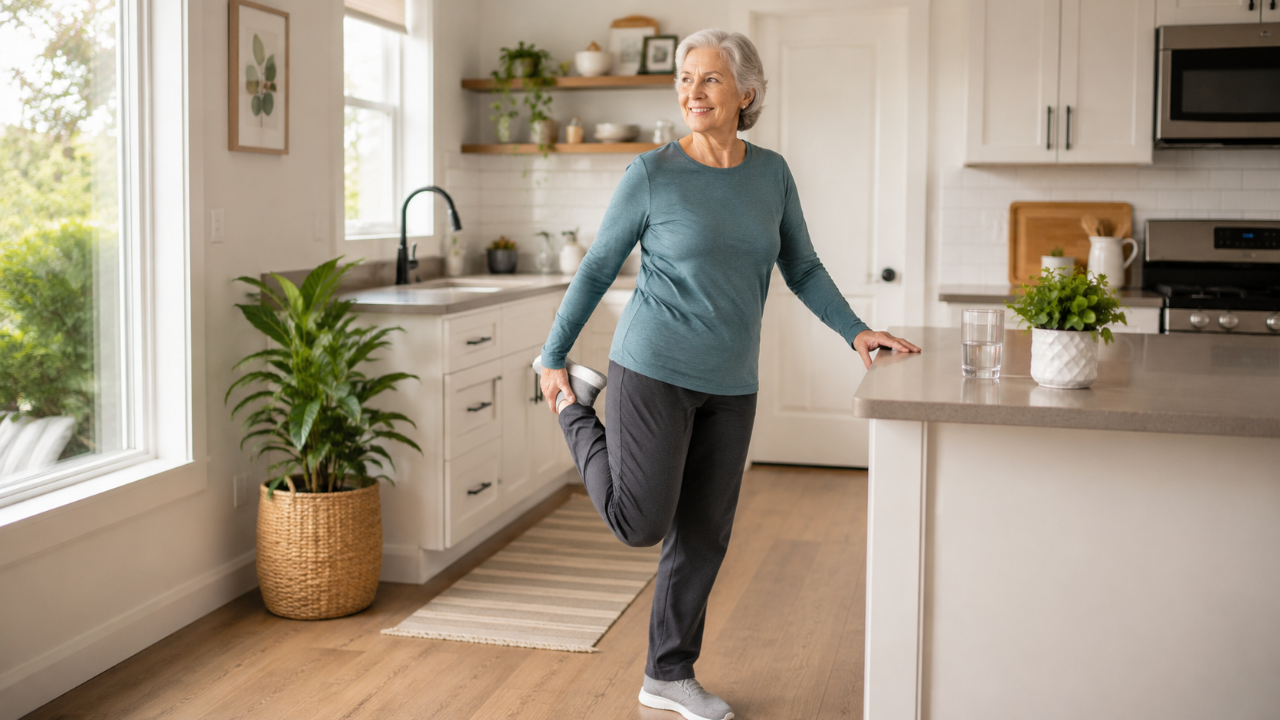
For many older adults, supported balance work is the best place to start. That might mean standing near a counter, chair, wall, or railing so the body can practice without feeling unsafe.
Balance training should feel focused, steady, and controlled. If someone feels unsafe, they are more likely to tense up, hold their breath, and avoid the movement altogether.
Using support can make balance work more realistic and more appropriate. When someone feels steady enough to practice, they are more likely to keep doing it.
The body needs regular opportunities to shift weight, respond to small changes, and coordinate movement between the feet, legs, trunk, eyes, and nervous system. That is what helps balance become something you continue to practice, instead of something you only worry about once it starts to feel worse.
Include the Upper Body and Ribs
When people think about aging and independence, they often think about the legs first. And while the legs are important, the upper body matters too.
The shoulders, arms, ribs, and upper back are involved in reaching, lifting, carrying, dressing, cooking, driving, posture, and breathing.
If the upper body becomes stiff, daily movements can start to feel limited. Reaching overhead may feel uncomfortable. The neck and shoulders may feel tight. Breathing may feel more shallow. Posture may become more rounded. Arm swing during walking may decrease.
From a whole-body perspective, the ribcage is especially important. The ribs move with every breath. They also connect closely with the thoracic spine, shoulders, neck, and diaphragm.
When the ribs and upper back are stiff, it can affect more than posture. It can change how comfortably you breathe, how easily your shoulders move, and how your body distributes tension through the neck and upper body.
A whole-body movement routine should include more than hips and legs. The upper body plays a major role in how capable and comfortable we feel throughout the day.
Break Up Sitting Whenever Possible
A daily movement routine does not always need to happen in one long session.
For many older adults, it may be more realistic to move for a few minutes at a time throughout the day.
This matters because long periods of sitting can make the body feel stiff, heavy, and less responsive. When the body stays in one position for too long, joints are not moving through their available range, muscles are not contracting as often, and circulation is not being supported by regular movement.
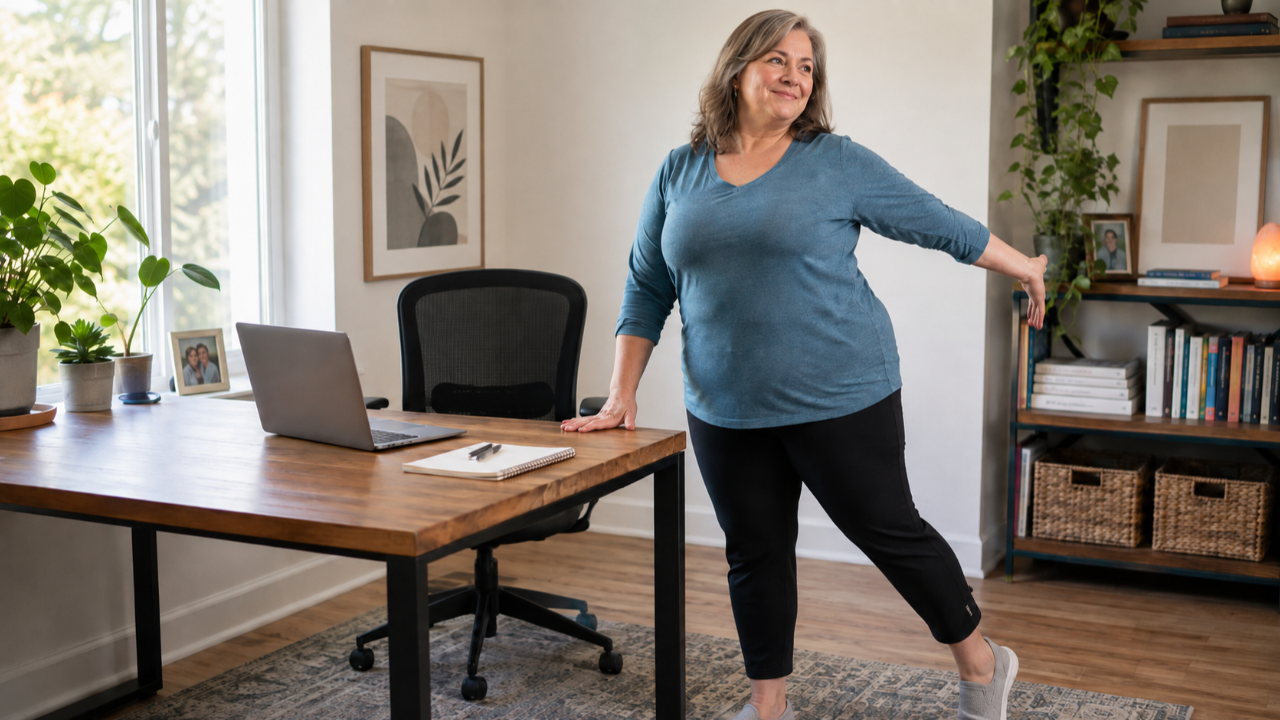
Breaking up sitting can be simple. It can mean standing more often, walking around the house between tasks, doing a few gentle movements at the counter, or taking a short movement break after a long period of sitting.
These small movement breaks can still make a difference, especially when they are done consistently throughout the day.
For many people, especially those who feel intimidated by exercise, this is a much more realistic place to start. You do not have to wait until you have the time, energy, or motivation for a full workout. You can simply give your body more movement opportunities throughout the day.
Keep the Routine Repeatable
The most useful movement routine is usually the one you can actually repeat.
Older adults benefit from consistent, appropriate movement that helps the body keep practicing important skills.
A good daily routine should include some spinal movement, hip and ankle mobility, practical strength, supported balance work, upper body movement, ribcage movement, and regular breaks from sitting.
That may sound simple, but simple is often exactly what works.
The body adapts to what it does regularly. If you regularly practice standing, reaching, rotating, stepping, balancing, breathing, and strengthening, you give your body a reason to keep those abilities available.
And if you are not sure where to start, I shared an example routine here:
6 Exercises Older Adults Should Do Regularly to Maintain Strength & Mobility
You can use it as a starting point, modify as needed, and repeat it often enough for your body to become familiar with the movements.
Final Thoughts
We are not trying to stop aging. We are trying to support the body as it ages.
Your joints, muscles, circulation, breathing, balance systems, and nervous system all respond to the way you move each day. When you move with consistency and variety, you give those systems more opportunity to keep working together.
That is exactly why I created Graceful Aging: Mobility and Strength for Seniors.
This 4-week program is designed to help you build strength, improve mobility, and increase your confidence with movement in a safe, accessible way. The exercises are gentle, low-impact, and structured so you can progress without feeling overwhelmed.
If you have been noticing more stiffness, less strength, less energy, or you have started limiting activities because movement feels uncomfortable, this program gives you a realistic place to start.
You can learn more and join here: