How Gentle Movement Helps Lymph Flow, Blood Flow, and Nerve Comfort
Gentle movement is often overlooked because it does not look intense enough to make a difference. But when your body feels stiff, heavy, puffy, irritated, or generally off, more intensity is not always what it needs first. Sometimes what helps most is regular motion. Not forced stretching. Not pushing through pain. Just repeated, thoughtful movement that helps the body circulate, adapt, and stop getting stuck in the same patterns all day.
This is one of the reasons mobility work can feel so good, even when it looks simple from the outside.
When you move your arms, rotate your spine, open your chest, shift your ribs, or take your joints through a gentle range of motion, you are doing more than loosening muscles. You are changing pressure in the body. You are helping muscles contract and relax. You are giving joints a chance to move more normally. You are helping tissues glide instead of staying held in one fixed position. You are also supporting the movement of blood, lymph, and nerves through areas that often get compressed by posture, tension, repetition, or too much stillness.
That matters more than most people realize.
Mobility is not just about flexibility
A lot of people still think of mobility as something separate from real exercise. They picture stretching, touching their toes, or doing a few circles with their arms before a workout. But mobility is really about movement quality and movement access. It is your ability to move a joint or area of the body with control, space, and relative ease. And when that movement is reduced, it is not just the muscles that feel it.
The tissues around that area feel it too. Blood vessels pass through those areas. Lymphatic pathways depend on pressure changes and muscle activity. Nerves need enough space and enough motion in the surrounding tissues to move comfortably. Joints need variation in load. Soft tissues need to glide.
So when a part of the body stays compressed, guarded, or underused, the issue is rarely just tightness. It is often a broader loss of movement, flow, and adaptability. That is why gentle mobility work can make such a noticeable difference in how your body feels.
Your body depends on motion to help move fluid
Unlike blood, which has the heart as a central pump, the lymphatic system depends heavily on movement. Muscle contractions, breathing, pressure changes, and the movement of surrounding tissues all help support lymphatic flow. That means your body benefits from regular motion in ways that go beyond calorie burn or fitness goals. This is part of why people often feel less puffy, less heavy, or less stagnant after a walk, a mobility routine, or even a few minutes of gentle movement after sitting too long.
It is not because one short session fixes everything. It is because motion helps the body do what it is designed to do. The same goes for blood flow. When you move, tissues receive more circulation. Muscles help with return flow. Blood vessels respond to changing demand. The body shifts away from the stagnation that can build when you stay in one position for too long.
You do not need an exhausting workout to benefit from that. Often, what helps most is frequency. Small amounts of movement done regularly can support circulation better than doing nothing all day and then trying to undo it with one hard workout.
The area around your collarbone is a good example
One of the best examples of this is the upper chest, collarbone, neck, and shoulder region. This is a busy transition zone in the body. Important nerves pass from the neck into the arm here. Major blood vessels travel through this region. Lymphatic drainage from the upper body connects through this area. Breathing mechanics also influence it through the ribs, chest wall, and surrounding tissues.
So when that region stays stiff and compressed, symptoms can show up in a lot of ways. Some people notice neck tension. Some feel heaviness in the shoulders. Some get upper back stiffness, headaches, tingling, numbness, tension through the chest, or that general feeling that everything in the upper body is getting pulled forward and crowded.
This is especially common in people who work at a desk, drive a lot, feed a baby, carry children, scroll on their phone, or spend most of the day with their arms and head in front of them. That position is not automatically harmful. The issue is usually not posture in a rigid sense. The issue is lack of variability. When the shoulders stay forward, the upper ribs do not move well, the chest stays guarded, and the neck has to compensate, the whole area can start to feel dense, compressed, and irritated. The tissues there stop getting the variety of movement they need.
That is where something as simple as arm circles can actually be useful.
Why arm circles can help the neck, head, and upper body
Arm circles are not just a shoulder exercise. They move the shoulder girdle. They change the position of the clavicle and scapula. They ask the upper ribs and chest wall to participate. They create motion through the tissues of the upper chest and front of the body. They gently load and unload the muscles around the shoulder and neck. That means they can help interrupt the compression and stillness that often build in that region.
If someone spends all day working in front of them, holding tension through the chest, upper traps, and front of the shoulders, arm circles can be a simple way to reintroduce movement to an area that has become crowded and under-mobile.
That does not mean arm circles directly fix every symptom. But they can support the conditions that help the upper body function better. They may improve tissue glide. They may reduce the feeling of pressure through the upper chest. They may help the ribs and chest move better with breathing. They may also create a more comfortable environment for the nerves and vessels that pass through that region. That is often enough to change how the neck, shoulders, and even head feel.
Restriction in motion affects physiology
This is the bigger concept that matters. When an area of the body is not moving well, physiology in that area can become less efficient. Muscles are not contracting and relaxing through a full, varied range. Joints are not sharing load as well. Pressure is not shifting as well. Tissues are not gliding as well. Fluid movement is less supported. The area may become more sensitive, more guarded, and more easily irritated.
At first, that might just feel like tightness, stiffness, swelling, or tension. But over time, reduced movement options can contribute to compensation patterns, local irritation, poor tolerance to load, and symptoms that become harder to ignore. This is one reason I often say symptoms are not always the starting point. They are often the result of a body area that has been adapting to compression, repetition, or poor movement variability for longer than we realized.
Not every asymmetry is a problem. Not every issue comes from stiffness. But it is still important to understand that reduced motion affects more than flexibility. It affects how tissues function.
Nerves need movement too
This is another piece people do not think about enough. We usually talk about muscles and joints, but nerves also live in a physical environment. They pass through muscles, around bones, under connective tissue structures, and through spaces that can become tight or irritated. They are designed to move with you.
So when an area becomes very stiff, compressed, inflamed, or repetitive in its movement pattern, nerves can become more sensitive too. That may show up as tingling, burning, pulling, numbness, or discomfort that does not feel exactly muscular. Gentle movement can help here as well. Not because it changes the nerve itself in some dramatic way, but because it improves the environment around it. It may reduce mechanical irritation. It may improve tissue mobility. It may restore some movement variability to an area that has become fixed.
Again, this is why gentle movement matters. It is not random. It supports the tissues that help the whole area function.
This is why gentle movement often feels so relieving
When people finish a mobility session and say, “I just feel better,” there is usually a reason.
Maybe their breathing got better.
Maybe their upper ribs started moving again.
Maybe their shoulders stopped living in one position.
Maybe their muscles started helping pump fluid.
Maybe their joints shared load more evenly.
Maybe their nerves were not being irritated by the same compression pattern for a little while.
Maybe circulation improved enough that the whole area felt less dense and more alive.
That response is not all in your head. It is often your body responding well to being given motion, variation, and a better mechanical environment.
Gentle does not mean ineffective
This is the part I really want more people to understand. Gentle movement is not a lesser version of exercise. It is not something that only matters if you are injured, older, or unable to do more. Gentle movement is often the right starting point because it restores function that higher-intensity exercise depends on.
If your body is already stiff, irritated, compressed, swollen, or overcompensating, pushing harder is not always the smartest first move. Sometimes the most helpful thing is to improve the quality of motion first. Help the body circulate. Help the joints move. Help the ribs expand. Help the tissues glide. Then you build from there. This is especially important for people who sit all day, deal with chronic tension, feel puffy or stagnant, get frequent neck and shoulder discomfort, or notice their body feels better with movement but worse with too much stillness.
The takeaway
You do not need to force mobility work to benefit from it.
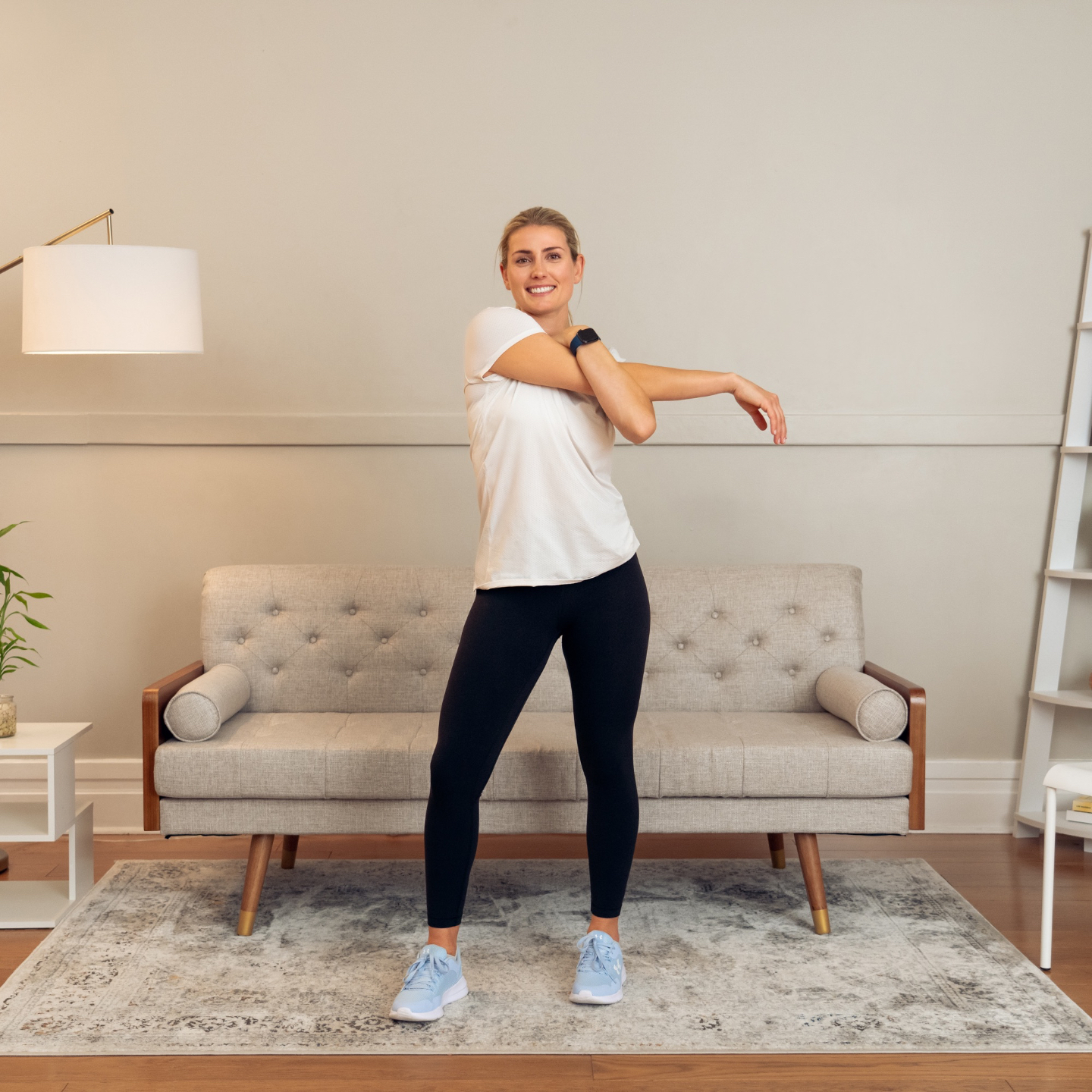
A few minutes of arm circles, chest opening, rib movement, spinal rotation, supported reaching, gentle walking, or other regular mobility work can go a long way when done consistently.
Because the goal is not just to stretch. The goal is to help the body move fluid, improve circulation, create space, reduce compression, and support the tissues that keep you feeling better.
Sometimes what your body needs most is not more intensity. It is more motion, more often. If you need some ideas, please follow along to this 5 minute mobility routine with me!
Follow along on Instagram, TikTok, and YouTube, or join the email list at the bottom of this page to get helpful wellness tips and tricks right into your inbox.