How to Go From Sedentary to Active, Even If It Has Been Decades
When someone tells me they want to become more active after years, or even decades, of being sedentary, they often assume the first step is choosing a workout.
Should they start walking? Join a gym? Buy weights? Try a beginner fitness challenge?
Those questions matter eventually, but I do not think the workout itself is the most important part of this transition.
In many cases, the bigger challenge is figuring out how movement can realistically fit into a life that currently does not include it. You are building confidence, changing routines and learning what your body can tolerate. The exercises are simply the tools you use along the way.
That may sound unusual coming from someone who creates exercise programs, but I have seen how quickly an overly ambitious workout plan can fall apart when the foundation has not been built first.
Wanting to Be Active Is Usually Not the Problem
Most sedentary people who want to become active already understand that movement is important.
They may value strength, mobility, independence and long-term health. They might miss activities they once enjoyed or feel frustrated that everyday tasks have become harder. Some are worried about losing further mobility as they get older.
The problem is rarely a complete lack of interest. The real question is: How do you move from wanting an active life to actually living one consistently?
A sedentary routine develops for many different reasons. Perhaps you spend most of the day sitting at work and then move into a busy evening of cooking, caregiving and household responsibilities. Pain, fatigue, surgery or a past injury may have made exercise feel intimidating. You might have tried fitness programs before and found them too fast, too demanding or difficult to modify. By the end of the day, there may be very little time or energy left.
Telling someone in this situation to “make exercise a priority” does not solve the underlying problem. Exercise cannot move to the top of the list if doing so makes everything else feel unmanageable. A lasting change has to work within your real life.
Resist the Urge to Make Up for Lost Time
When people feel ready to change, there can be a strong temptation to jump into the most intense workout they believe they can handle.
It is easy to think that if you have been inactive for years, you need to work especially hard to compensate. This often leads to an all-or-nothing approach: a full workout plan, a strict weekly schedule and the expectation that you will immediately exercise the way an already active person does.
The first few workouts may feel productive. Then soreness sets in, an old area starts bothering you or the schedule becomes difficult to maintain. Missing one workout turns into missing several, and it begins to feel as though the attempt has failed.
Gradual progression is usually a better approach. Exercise guidance from the American College of Sports Medicine emphasizes gradually increasing exercise volume and intensity, while behaviour-based strategies and enjoyable forms of movement can improve adherence.
Your first goal is not to prove how hard you can exercise. It is to create an experience you are willing and able to repeat.
Start by Learning What Works for You
If I were helping someone move from sedentary to active, I would begin by looking at their daily routine.
When is movement most realistic? Which part of the day feels least rushed? How much time can be set aside without causing stress somewhere else?
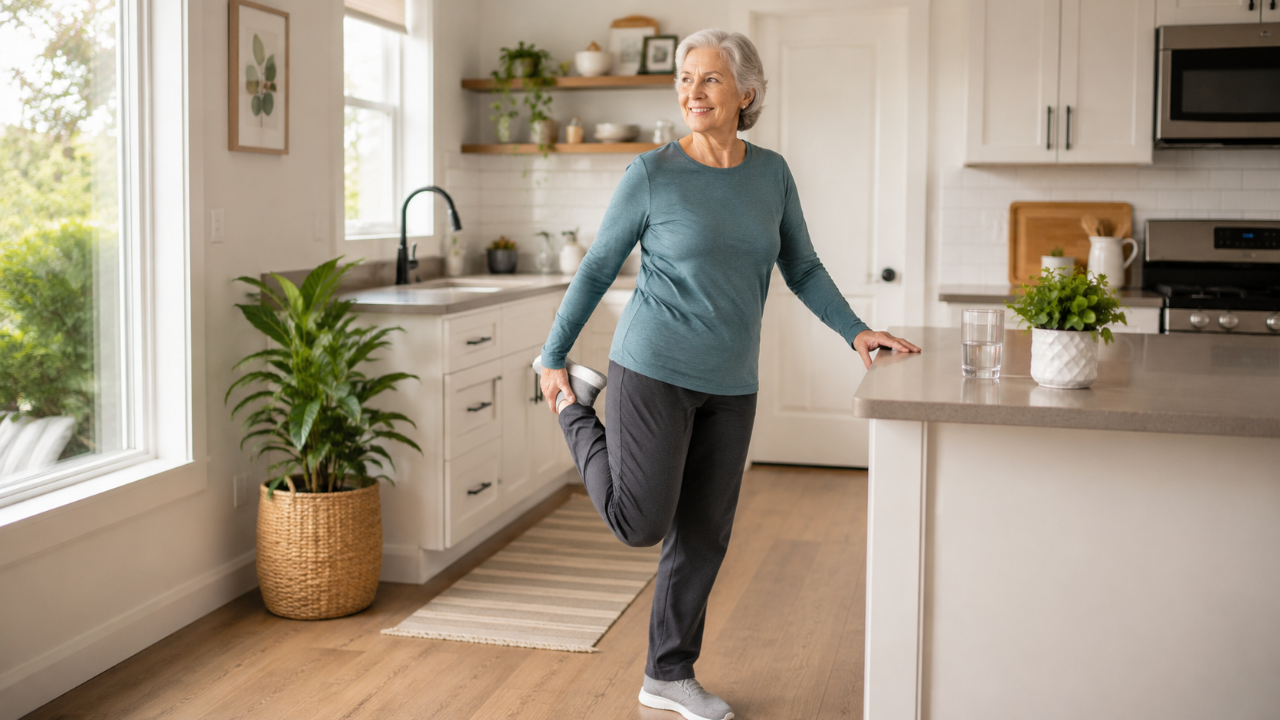
The answer may be ten minutes in the morning, a short walk after lunch or a few supported exercises in the kitchen before dinner. It does not need to resemble anyone else’s routine.
I would also pay attention to how different kinds of movement make the person feel.
Does the session leave you pleasantly energized, or completely drained? Do you feel more mobile afterward? Are you experiencing manageable muscle fatigue, or enough discomfort that you dread doing it again?
These responses provide useful information. Becoming active involves learning to interpret your body rather than constantly overriding it.
This does not mean avoiding every movement that feels challenging. Some effort is part of improving strength and endurance. The challenge should still feel appropriate for your current capacity, and recovery should not regularly interfere with the rest of your life.
Build Confidence Before Chasing Fitness
Confidence is an important and often overlooked part of exercise.
A person who has not exercised in a long time may feel uncertain about balance, coordination or their ability to follow instructions. They may worry about getting down to the floor, moving too quickly or aggravating a painful area.
This uncertainty can make even a beginner workout feel stressful.
Confidence begins to grow when you complete movements successfully. You learn that you can use a chair for support, reduce the range of motion, slow the pace or remain seated when necessary. You begin to understand the difference between productive effort and a movement that does not feel right for your body.
Every successful experience gives your nervous system and your mind more evidence that movement is manageable.
Over time, exercise starts to feel less like a test you might fail and more like something you know how to adapt.
Your Body May Need a Physical Foundation Too
Mindset, routine and confidence come first, but there is also a physical foundation to consider.
After long periods of inactivity, the body may not move comfortably through the ranges required for more demanding exercise. Joints can feel stiff, muscles may fatigue quickly and certain areas may be compensating for others.
For example, limited movement through the hips, ankles or upper back can change the way you squat, walk, reach or climb stairs. Your body will still find a way to complete the task, but it may rely more heavily on another joint or muscle group.
Compensation is not automatically bad. The body is adaptable, and we compensate constantly. Problems may develop when the same area repeatedly takes on more load than it is prepared to handle.
This is one reason I often begin with gentle, whole-body mobility rather than isolated or highly demanding exercises.
The intention is to help the joints move through comfortable ranges, improve coordination between different areas of the body and gradually reintroduce a variety of positions.
Movement also changes what is happening internally. Contracting muscles assist circulation, joint movement helps distribute fluid within and around tissues, and changes in position influence breathing mechanics. This can help explain why a short mobility session sometimes leaves the body feeling warmer, less stiff and more alert.
Why Range of Motion Matters Before Intensity
Range of motion is not about forcing yourself into deep stretches or trying to become extremely flexible.
It is about having enough comfortable movement available to perform daily activities and exercise with reasonable control.
Consider a simple sit-to-stand movement. It involves the ankles, knees, hips and trunk working together. If one area contributes very little, another area may have to contribute more.
Improving the available movement does not guarantee perfect technique, nor does everyone need to move in exactly the same way. It simply gives the body more options.
That matters when you eventually begin strength training. Resistance exercise deliberately challenges muscles so they adapt and become stronger. To tolerate that challenge well, it helps to have appropriate joint movement, coordination and recovery capacity already developing.
The goal is not to spend months preparing to exercise. Foundational mobility is exercise. Walking is exercise. Practising balance, standing from a chair and moving your arms through a comfortable range are all meaningful forms of physical activity.
You are already training the body. You are simply doing it at a level that prepares you for what may come next.
An Active Life Is Bigger Than a Workout
Public-health guidelines encourage adults to work toward 150 to 300 minutes of moderate aerobic activity each week, along with muscle-strengthening activity. They also make an important point that is sometimes overlooked: some physical activity is better than none, and people who are inactive should begin with small amounts and gradually build over time.
Those weekly recommendations can provide a useful long-term direction, but they do not need to be your starting line.
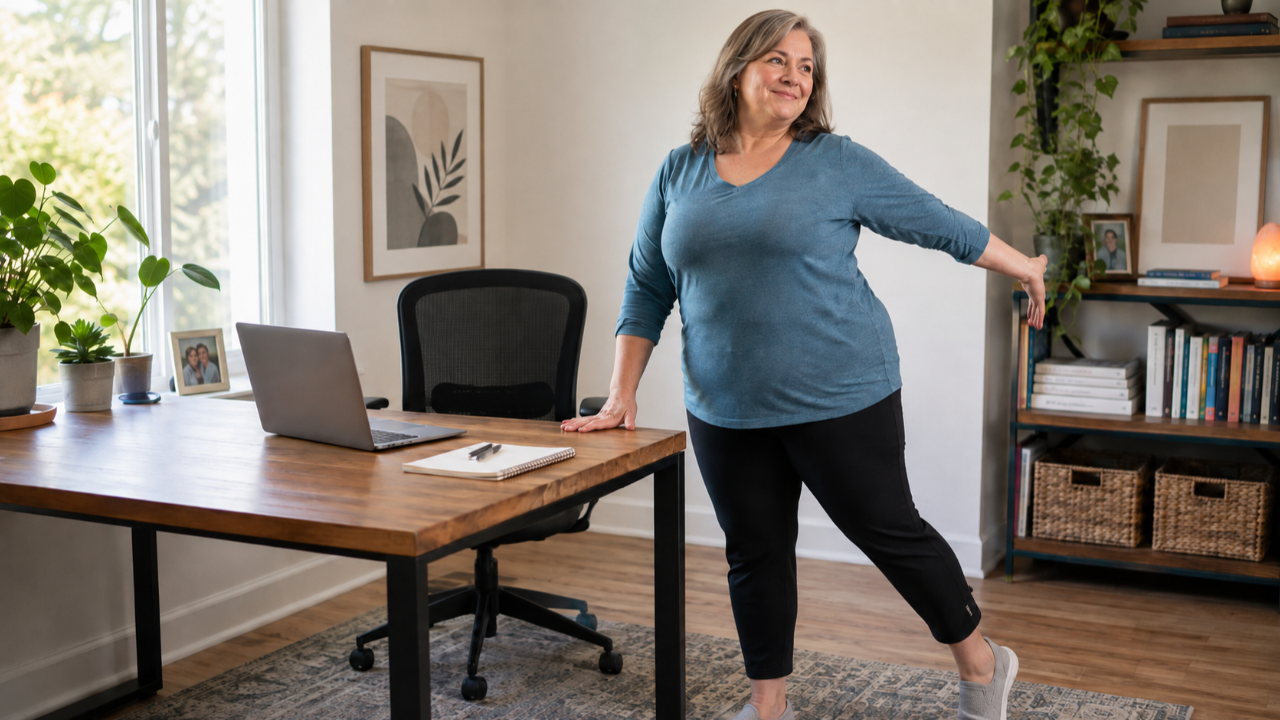
Going from sedentary to active may first look like breaking up long periods of sitting, walking for five or ten minutes, taking the stairs when it feels manageable or completing a short mobility routine several times a week. Canadian movement guidance also recommends breaking up long periods of sitting as often as possible.
These small changes matter because they begin to alter your normal day.
Eventually, movement no longer exists only inside a scheduled workout. You may notice that you stand more often, walk a little farther, feel more confident carrying groceries or have more energy for activities outside the home.
That is what becoming active really looks like.
Fitness and Health Are Not Exactly the Same Thing
It is also worth remembering that appearing fit does not automatically mean someone moves well or has excellent health in every area.
A person may be able to lift a heavy weight, run quickly or perform at an advanced athletic level while still experiencing poor mobility, recurring pain, inadequate recovery or significant stress.
Performance is one aspect of physical ability. It is not the complete picture.
For someone who has been sedentary, this can be reassuring. You do not need to chase an extreme version of fitness to make meaningful improvements to your health.
The aim is to help your body function better in your everyday life. That might mean walking comfortably, getting up from the floor, maintaining your balance, reaching overhead or having enough strength and endurance to enjoy activities with your family.
Your definition of progress should reflect the life you want to live.
Start in a Way You Can Continue
If it has been decades since you exercised regularly, you have not missed your opportunity.
You also do not need to transform your entire lifestyle in one week.
Choose a manageable amount of movement. Notice how your body responds. Use modifications when you need them, and allow your confidence and physical capacity to build together.
Once that foundation is established, you can gradually add time, resistance, complexity or intensity. You may eventually use weights, complete longer workouts or pursue goals that feel far away right now.
The important thing is that you have built a path that can actually take you there.
For anyone who needs help creating that foundation, Progressive Mobility Level 1 was designed as a gradual starting point. It includes quick, simple, whole-body sessions with seated and supported options, completed every other day over two weeks. The program is intended for people who are beginning, rebuilding confidence or looking for a more approachable way to improve how they move.
You do not need to begin with the hardest workout you can tolerate. You need to begin with movement you can return to.
Follow along on Instagram, TikTok, Facebook and YouTube, or join the email list at the bottom of this page to get helpful wellness tips and tricks right into your inbox.