Could Your Breathing Mechanics Be Driving Neck and Low Back Tension?
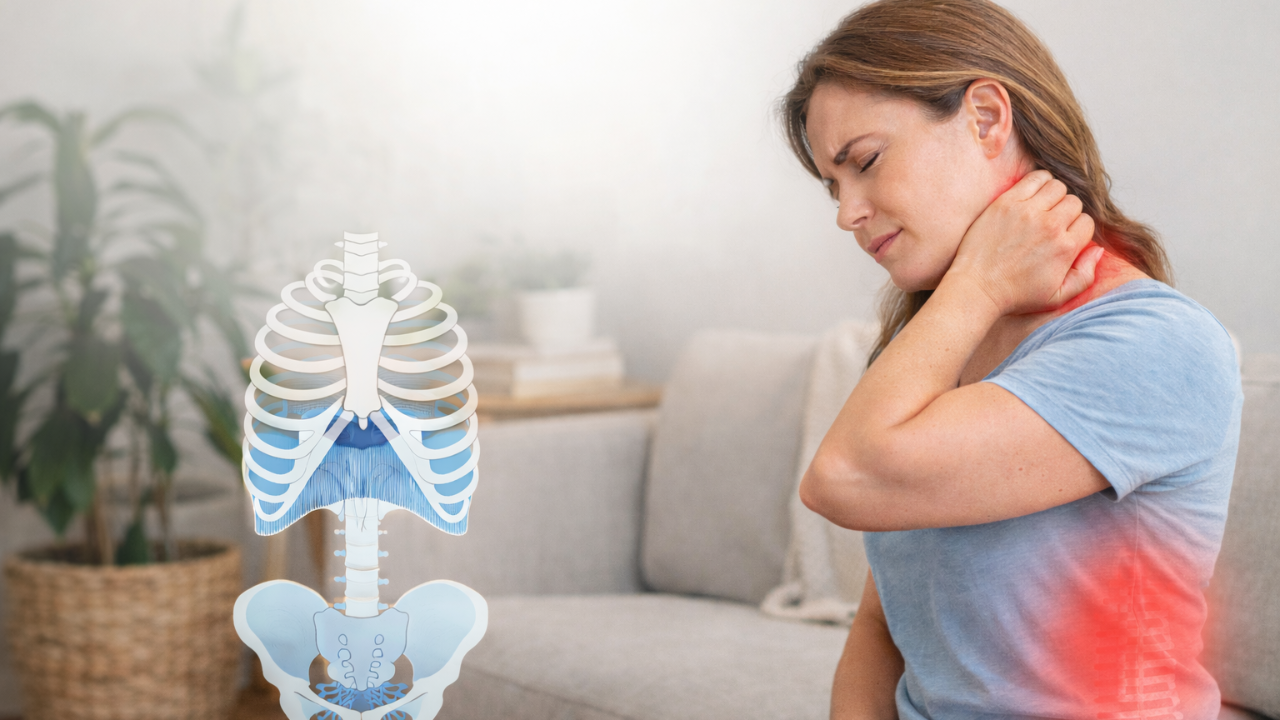
The overlooked “movement” you do all day: breathing
Most people think of breathing as a stress tool or a meditation thing. Useful, yes. But it’s also a mechanical event that happens 20,000-ish times a day.
That matters, because every breath changes pressure in your trunk, moves your ribs, influences your spine, and coordinates with your deep core. In other words: breathing is biomechanics.
If you’ve ever felt like you “carry tension” in your neck and jaw, or your low back feels like it’s constantly switched on, or your ribs flare and your core feels disconnected, your breathing mechanics might be part of the story.
And I don’t mean you’re “breathing wrong.” I mean your system may have adapted to stress, desk-life, pregnancy, pain, or habit, and your rib cage may have lost some of its natural range of motion. That adaptation is common. It’s also changeable.
Let’s break it down in plain language, with enough anatomy to make it useful.
Quick anatomy in plain language: the team that breathes with you
When I talk about breath mechanics, I’m really talking about a coordinated group:
- Diaphragm: a dome-shaped muscle under your lungs, attached to the lower ribs, sternum, and spine. It’s the primary driver of breathing.
- Rib cage + intercostals: the ribs need to move for your lungs to expand efficiently.
- Deep core (abdominal wall): helps manage pressure and supports the spine while you breathe and move.
- Pelvic floor: not separate from breath, it responds to pressure changes and coordinates with the diaphragm as part of an integrated pressure system (often described as a “canister”).
A simple analogy: picture your trunk like a soda can.
- The diaphragm is the top
- The pelvic floor is the bottom
- Your abdominal wall and back muscles wrap around it
Breathing changes the pressure inside the can. Movement (and comfort) depends on how well that pressure is managed.
What actually moves when you inhale and exhale?
Breathing isn’t just air moving in and out. It’s shape change.
Inhale (inspiration): expansion + pressure change
When you inhale, the diaphragm contracts and moves downward like a piston, increasing the volume in the thorax so air can flow in.
At the same time, the rib cage moves in a few classic patterns:
- “Bucket handle”: the ribs swing outward on the sides (lateral expansion)
- “Pump handle”: the front of the rib cage lifts and moves slightly forward
- Lower rib “caliper” motion: the bottom ribs open like a hinge
These aren’t just fancy terms, they’re a helpful way to picture 360° expansion, not just “chest up.” I encourage you to look at the diagrams here: Physical Therapy Charlotte, NC
Muscles doing more work on inhale: diaphragm and external intercostals are the main players. Accessory muscles can assist when needed.
Exhale (expiration): recoil + support
A relaxed exhale is mostly elastic recoil (your rib cage and lungs returning toward resting position). When you exhale more forcefully, your abdominal muscles contribute.
Muscles doing more work on exhale: abdominal wall (especially with effort), internal intercostals, and pelvic floor responding to pressure.
The big idea: your ribs should be able to expand and recoil. If they’re “stuck,” other areas will compensate.
When ribs get stuck: pregnancy, desk life, stress, and repetitive positions
Ribs don’t usually get “stuck” overnight. They get restricted through pattern.
A few common reasons:
- Pregnancy and postpartum: as the baby grows, the rib cage often adapts to changing pressure and posture. It’s common to see rib flare or a persistent “open” rib cage position afterward.
- Desk life / screen life: lots of forward rib position, limited thoracic rotation, and a smaller rib excursion with breathing.
- Chronic stress: breath becomes faster and higher, and your system leans on accessory muscles more often. Accessory muscles commonly include the scalenes and sternocleidomastoid (and sometimes upper chest muscles), which can feed neck tension patterns.
- Repetitive movement patterns (even if you don’t sit): doing the same things the same way, every day, narrows the movement options your body keeps “available.”
Over time, muscles begin to prefer the ranges they live in most. This is why people often describe “short” muscles. Sometimes it’s not true shortening, it’s a nervous system preference for a limited range.
Common compensation patterns I see:
-
More neck and upper trap breathing (shoulders creeping toward ears)
-
Rib flare (lower ribs lifted forward, abdomen feels pushed out even at rest)
-
Gripping low back tone (feels like you can’t fully relax)
-
Less side-body expansion (the “bucket handle” motion becomes limited)
- Poor shoulder mobility (shoulder blade is not gliding properly)
And because the ribs and upper spine are so tied to the neck, shoulders, and nervous system tone, this can show up as more than just “tightness.”
The clavicle + upper ribs matter for fluid flow and headaches
This is one of those areas that gets ignored until it’s not.
The upper rib cage and clavicles contribute to normal movement around the thoracic inlet, where major blood vessels, nerves, and lymphatic pathways pass. If your upper ribs and collarbones barely move (because breathing is mostly happening in a small, stiff range), it can be associated with a “congested” feeling: pressure headaches, heavy neck, or that sense of tension that won’t budge.
I’m careful with cause-and-effect here, but clinically, improving rib and upper thoracic motion often changes the whole “head/neck” experience for people—especially when the breath pattern shifts away from constant accessory muscle work.
Neck + jaw connection: why tension travels upward
If the diaphragm isn’t doing its job well (or your ribs aren’t moving enough to let it), your body will still get air in. It will recruit help.
That’s where accessory breathing muscles come in: sternocleidomastoid, scalenes, pectorals, and others.
These muscles attach around the neck, collarbones, and upper ribs. So if they’re constantly “on,” it’s not surprising that your neck feels tight and your jaw follows along.
Signs your breath mechanics might be contributing
You don’t need all of these for breath to be relevant. Even one is worth exploring.
- Shallow chest breathing most of the day
- Breath-holding during effort (stairs, lifting, workouts)
- Rib flare or “open ribs” that don’t soften on exhale
- Shoulders creeping up toward ears when you inhale
- Jaw clenching paired with stress breathing
- Digestive discomfort that seems linked to posture and upper back stiffness (your thoracic spine mobility and nervous system tone matter for how the system runs)
Three 2-minute resets you can do (with photos added here)
These are simple on purpose. Pick one. Do it daily for a week. Notice what changes.
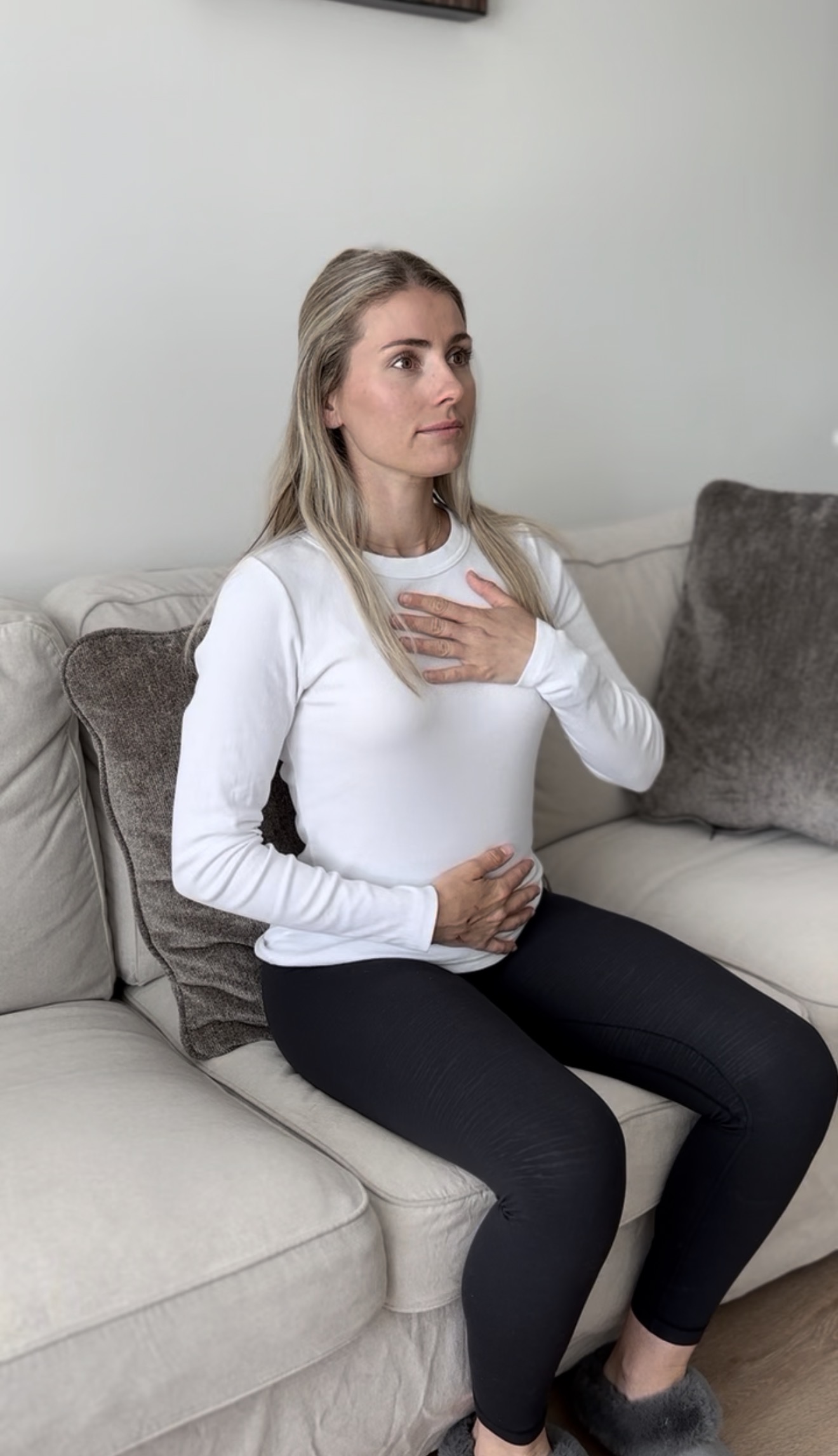
1) Slow nasal breathing with a long exhale
- One hand on your lower belly
- Inhale through the nose and feel your abdomen expand
- Exhale longer than you inhale and let the ribs soften down and in
- Aim for 5–6 breaths
Cue: “Ribs widen on inhale, ribs melt on exhale.”
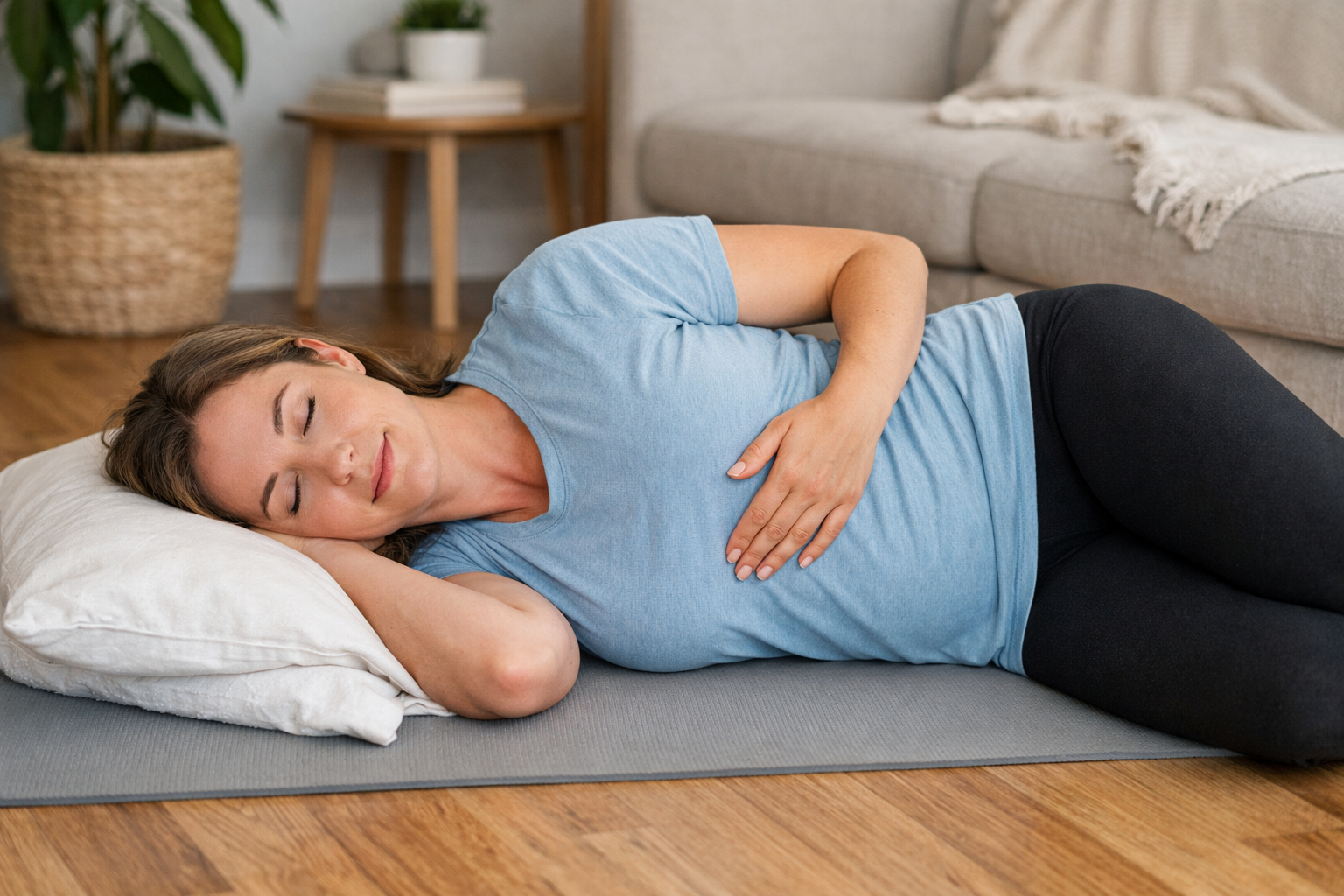
2) Side-lying or child’s pose breaths
Side-lying is underrated because the floor gives feedback.
- Lie on your side with knees bent, one hand on the top side ribs
- Inhale into the side ribs (think “fill the back/side”)
- Exhale and let the ribs settle
- 6–8 slow breaths
Child’s pose variation works similarly if it’s comfortable.
Cue: “Breathe into the parts that feel quiet.”
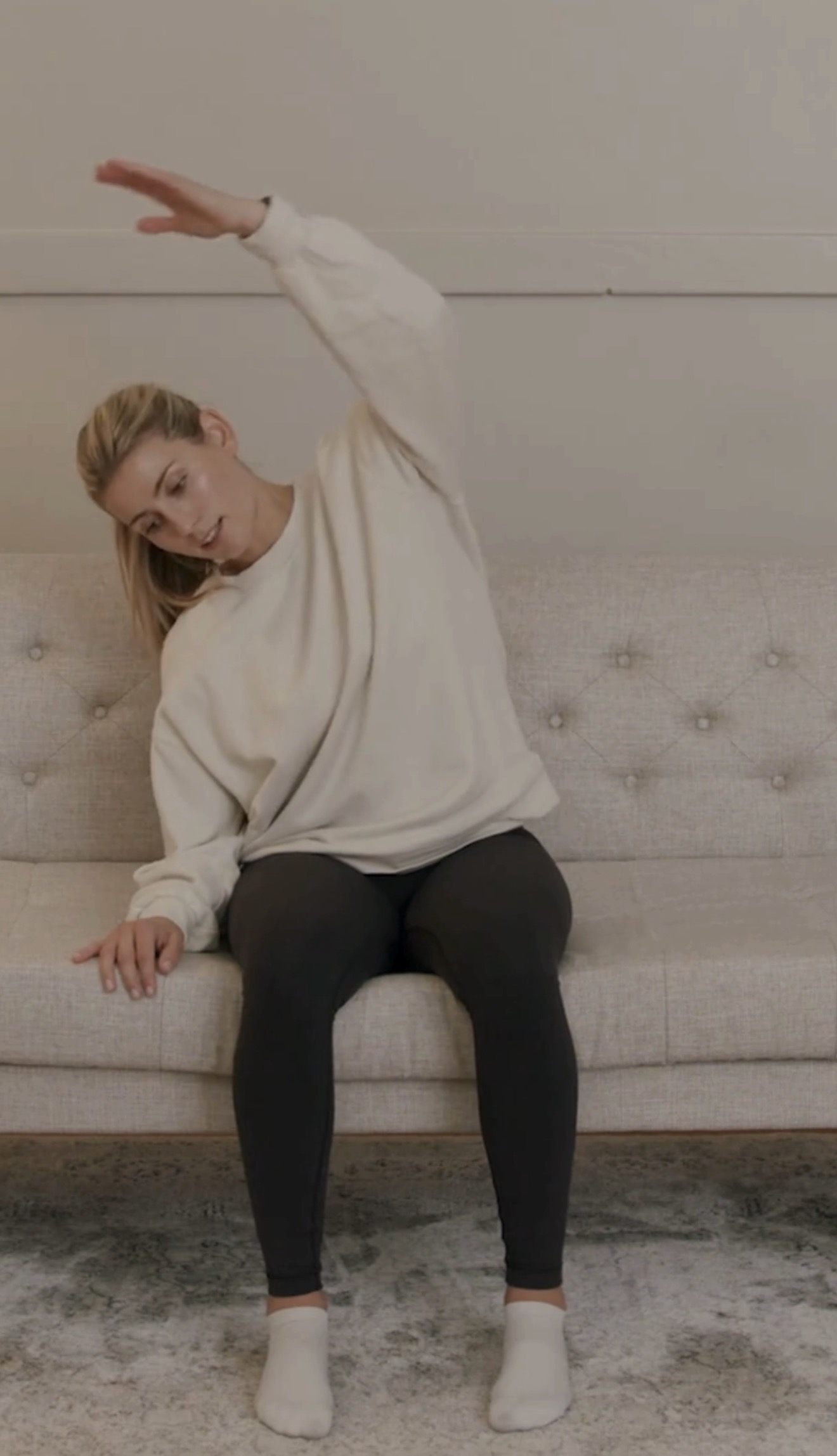
3) Rib-opening movement + breath (gentle side bends and rotations)
-
Seated or standing side bend: inhale into the opened side ribs
-
Exhale, return to center
-
Add gentle thoracic rotations: inhale to rotate, exhale to come back
-
4–6 reps each direction
Cue: “Movement creates room, breath fills the room.”
A final thought: breathing is practice, not perfection
Your breath is shaped by your life: your posture, your stress, your pregnancies, your injuries, your habits, your sport history, your seasons.
So if this feels like a missing piece for you, start small. Two minutes. One reset. Consistent practice.
Because breath isn’t only calming, it’s mechanical, it’s foundational. And it’s something you can improve.
If you want support with this, our Inclusive Movement routines are designed to be simple, joint-friendly, and truly doable—especially if you’re rebuilding from stiffness, stress, pain, or a long season of “holding it all together.” (inclusivemovement.com)
Follow along on Instagram, TikTok, and YouTube, or join the email list at the bottom of this page to get helpful wellness tips and tricks right into your inbox.