How Movement Nourishes Your Spine and Nervous System

Let’s talk about your spine. Not just in terms of posture or pain, but in the way it supports, communicates, and nourishes your entire body. As an osteopathic manual practitioner and movement educator, I work with women of all ages and abilities, from brand new beginners to older adults reintroducing gentle activity into their routines. And one thing I come back to again and again, especially inside Inclusive Movement, is this:
Your spine responds to support, not stress.
And one of the most powerful ways to support it—and your nervous system—is through simple, consistent movement.
More Than Bones: Your Spine’s Role in Systemic Health
We often think of the spine as a stack of bones. But it’s far more complex and dynamic than that. Your spine houses your spinal cord, which is a direct extension of your brain. Wrapped around that cord is cerebrospinal fluid (CSF)—a clear, nutrient-rich fluid that acts as a shock absorber, circulates hormones and waste, and protects the brain and spinal cord from mechanical damage.
Here’s the part most people don’t know: cerebrospinal fluid flows better when you move. Every time you flex, extend, or rotate your spine—even slightly—you help circulate this fluid. That flow improves the health of your central nervous system, and by extension, every system it influences: digestion, breathing, immune response, and emotional regulation.
If you’ve ever felt clearer-headed, more relaxed, or more energized after gentle movement, this is one reason why.
Stillness Can Create Stiffness
When you’re in pain or worried about injury, it’s natural to limit movement. But the truth is, lack of motion doesn’t protect your spine—it limits its function.
Your intervertebral discs—the small cushioning pads between each vertebra—don’t have their own blood supply. They rely on a process called imbibition, which uses gentle compression and decompression to draw in nutrients and hydration. Think of it like squeezing and releasing a sponge in water.
When you avoid movement for too long, these discs lose hydration. Over time, that leads to reduced shock absorption, stiffness, and even increased risk of injury—not because you moved too much, but because you moved too little.
This is why gentle, non-threatening motion is a cornerstone of every program inside Inclusive Movement. You’re not just stretching—you’re helping your body work the way it’s meant to.
Movement Builds Safety, Not Just Strength
Another way movement supports the nervous system is by creating a sense of safety. When you move with tension or hesitation, your body enters a protective state. Your muscles guard. Your breath shortens. Your range of motion shrinks.
But when you move slowly, intentionally, and with breath, the opposite happens:
- Your nervous system downregulates
- Your muscles release unnecessary tension
- Your brain begins to associate movement with safety again
This is especially important for those who have experienced pain, trauma, or disconnection from their bodies. Movement becomes more than physical—it becomes therapeutic.
Inside our gentle spine mobility sessions, I often pair diaphragmatic breathing with slow spinal articulation—like flexion and extension, gentle rotations, or roll-downs. These movements support both spinal and nervous system health.
The Core-Spine Connection
Another overlooked piece of spinal health is your deep core.
Not just your abs—but the team of muscles that includes your transverse abdominis, multifidus, pelvic floor, and diaphragm. Together, they create dynamic stability that supports your spine from all sides.
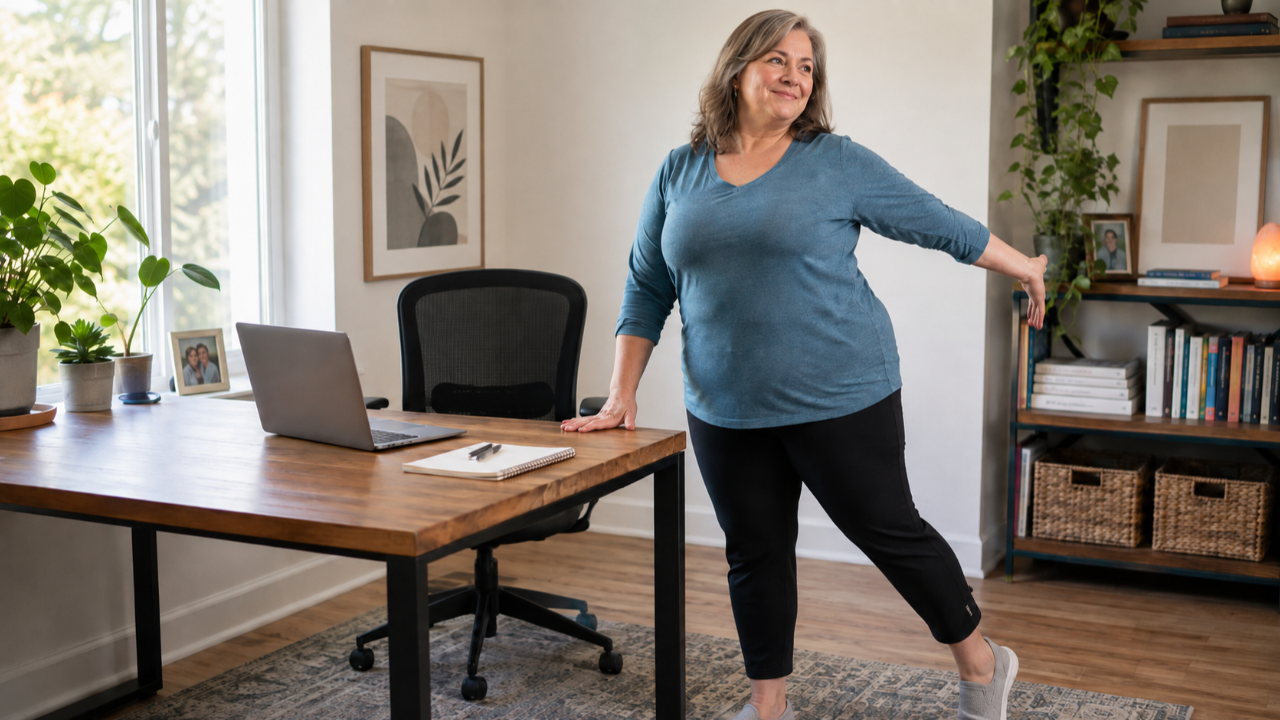
When we engage in small, controlled movements that link breath and motion such as gentle side bends, deep breathing or gentle twists, we’re not just mobilizing the spine. We’re also:
- Activating deep core stabilizers
- Improving coordination between breath and support
- Training postural reflexes without excess tension
This is one of the foundational approaches in our beginner-friendly mobility programs: building strength through gentle motion, not in spite of it.
Real-Life Application: Why It Matters for Overall Wellness
Gentle spinal mobility isn’t just about easing stiffness in the moment. It improves how you function in everyday life:
- Easier time getting out of bed
- Less tension after sitting at a desk or driving
- Better posture with less effort
- More energy and mental clarity
And perhaps most importantly: a renewed sense of confidence in your own body.
That’s what we’re after at Inclusive Movement. Not impressive flexibility or high-intensity workouts. Just real progress that feels supportive, accessible, and sustainable.
Where to Start
You don’t need a 60-minute routine. You don’t even need equipment. You just need a willingness to begin.
Here are 3 simple ways to support your spine today:
- Seated cat-cow – Gently flex and extend your spine with breath, opening your chest to the sky when extending
- Standing pelvic tilts – Rock the pelvis by moving your belly button toward the floor then upward to restore lumbar mobility
- Spinal roll-downs – Let your head, shoulders, and spine articulate one vertebra at a time as you roll toward the floor and then slowly stand back up
Do one of these daily. Even 30 seconds counts.
Final Thoughts: Support, Not Stress
When we shift the focus from performance to connection…
From tension to calm…
From holding back to gently showing up…
We give our body what it really needs: movement that helps it function better, feel safer, and carry us through life with less restriction.
This is the kind of movement we teach inside Inclusive Movement—low pressure, high reward, and built for all stages of life.
Ready to explore spine-friendly movement with us? Start with one of our most beginner-loved mobility programs here.
Follow along on Instagram, TikTok, and YouTube, or join the email list at the bottom of this page to get helpful wellness tips and tricks right into your inbox.