How to Feel Better This Month Without Starting Over

If You Want to Feel Better This Month, But Don’t Have the Energy for a Full Reset
There are seasons when a full reset sounds nice in theory, but completely unrealistic in real life.
You want to feel better. You want to move more, eat in a way that supports you, feel less scattered, and get back into healthier rhythms. But you also know you are already carrying a lot. Maybe life feels busy, mentally full, or just heavier than usual. In those seasons, the answer usually is not a dramatic overhaul.
More often, it is about making healthy choices easier to repeat.
A lot of people assume that if they are not following through, they need more discipline. But often, what looks like a motivation problem is really a load problem. Too many decisions, too many expectations, too many things to change at once. When life already feels full, even good habits can start to feel like more pressure.
That is why “starting small” is not lazy. It is often what makes consistency possible.
If the goal is to feel better next month, not just for three days, it helps to think less about a reset and more about what can realistically fit into your life right now.
Stop trying to fix everything at once
This is usually where people lose momentum before they even begin.
The urge is to clean up food, start working out regularly, fix sleep, drink more water, get more organized, and suddenly become a version of yourself who has everything together. It sounds productive, but in real life it often creates more pressure, more decisions, and more opportunities to feel like you are falling behind.
Trying to improve everything at once usually makes it harder to stay consistent with anything.
A better approach is to narrow the focus. Pick two things that would make the biggest difference in how you feel day to day. Not ten. Just two. That might be walking more and repeating a simple breakfast. It might be getting to bed a bit earlier and doing a short workout a few times a week. The goal is not to create the perfect plan. It is to create one that can survive a normal week.
This is something I come back to often myself. Things tend to go better when I stop trying to overhaul everything and just choose a couple of supportive habits I can actually stay with.
Choose a few habits you can repeat without thinking too hard
When life feels full, it helps when some healthy choices stop feeling like decisions.
This is where simple routines matter. Not because they are exciting, but because they lower the mental load. You do not need to reinvent breakfast every morning or come up with a brand new workout every day. Sometimes the most supportive thing you can do is repeat what already works.
That might look like rotating between the same two breakfasts, having one easy lunch you default to, keeping one short workout saved on your phone, or using the same walking route when your brain is tired.
There is something really helpful about making a few things automatic. Especially if you are someone who spends the rest of the day making decisions for other people, solving problems, or switching gears constantly. The fewer healthy choices that depend on fresh motivation, the easier it is to keep showing up for them.
For me, this often looks like simplifying meals and keeping movement options familiar. Not because I lack ideas, but because I know how much easier follow-through becomes when I do not need to decide from scratch every time.
Build your routine around real life, not ideal life
This one matters more than people think.
A lot of people create routines for the version of themselves that has loads of energy, a clear schedule, and plenty of mental space. Then they feel discouraged when they cannot keep up with it.
A better starting point is your actual life. Build around the tired version of you. The distracted version. The version balancing work, motherhood, appointments, responsibilities, and a brain that is already holding too much. That is the version of you your routine needs to support.
This usually means making the entry point easier. A ten-minute workout at home is often more realistic than a long gym session you need to psych yourself up for. A short walk after dinner is often more realistic than a bigger plan that depends on the whole day going perfectly. Repeating a couple of simple meals is often more realistic than trying to cook something different every night.
There have been many times in my life where things started working better as soon as I stopped planning around my best-case self and started planning around my regular self. That shift alone can make healthy habits feel much more doable.
Make healthy choices easier to start
A lot of consistency comes down to what is easiest to begin.
It is one thing to want to work out. It is another thing to already know what workout you are doing, have the mat out, and not need to think too hard before starting. The same goes for meals, walks, bedtime routines, and anything else you want to do more regularly.
We often give ourselves too much credit for future motivation and not enough support in the setup.
Making things easier to start can look very simple. Saving a workout ahead of time. Keeping walking shoes where you can see them. Having ingredients on hand for a few easy meals. Repeating a dinner that makes evenings feel less chaotic. Deciding ahead of time what your movement plan is on a busy day.
These details matter because they reduce friction. And when life already feels full, less friction matters a lot. This is something I notice all the time. The healthier choice is much easier to follow through on when it feels ready and accessible, instead of like one more thing I have to organize first.
Care more about momentum than intensity
When people feel behind, they often respond by trying to go harder.
That can feel satisfying for a few days, but it usually does not last. A more helpful question is not, what would make the biggest change the fastest. It is, what could still be happening four weeks from now?
That is where momentum matters more than intensity.
A short walk done regularly will usually do more for you than a burst of motivation followed by nothing. A simple workout you actually repeat is more helpful than an ambitious routine that burns you out in a week. A few meals that make you feel better and keep life manageable are often more useful than a dramatic nutrition reset you cannot maintain.
This is especially important in busy seasons. You do not need every healthy habit to be at full volume. You just need enough consistency to keep feeling connected to yourself.
I think this is where a lot of people get stuck. They assume a habit only “counts” if it is big enough to feel impressive. But often the habits that change the most are the ones that quietly keep going.
Let good enough count sooner
A lot of healthy habits get dropped because people keep raising the bar on what counts.
The walk does not count unless it is long enough. The workout does not count unless it is intense enough. The meal does not count unless it is perfectly balanced. The week does not count unless everything fell into place.
That kind of thinking makes consistency much harder than it needs to be.
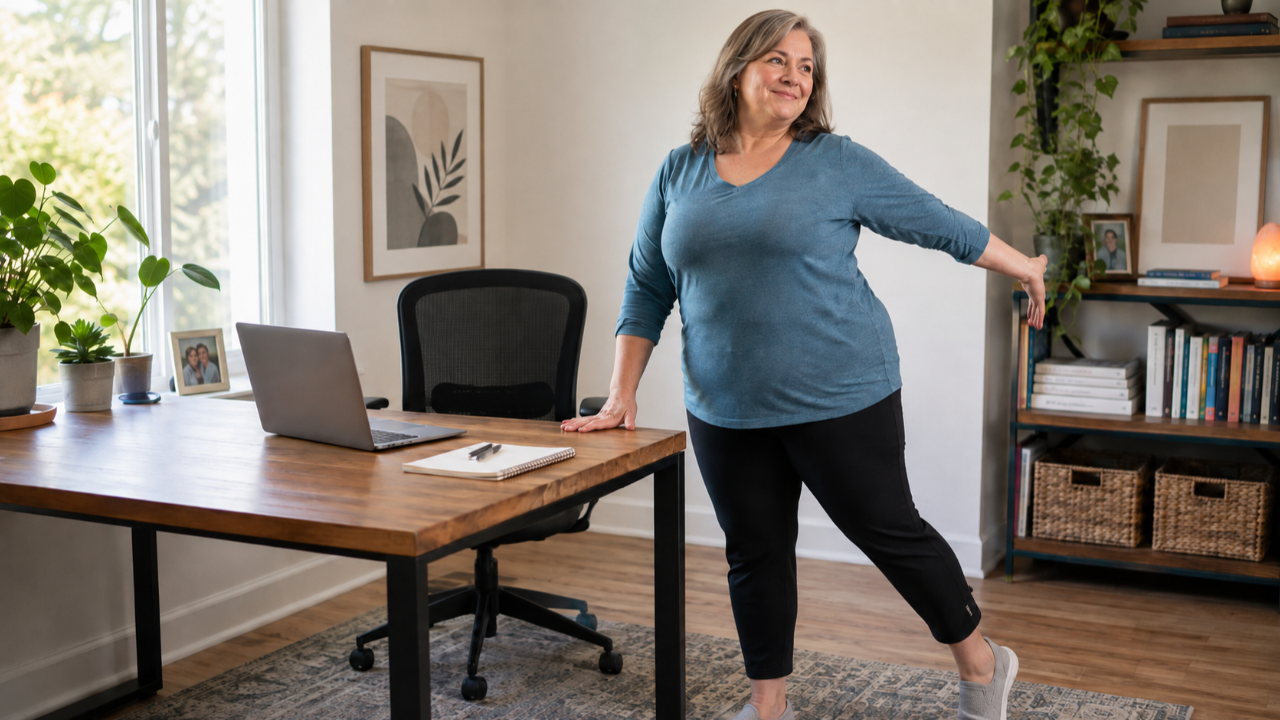
Good enough counts. A quick walk counts. A simple dinner counts. Stretching while something cooks counts. The easier version of the workout still counts. Choosing the more supportive option in a rushed moment still counts.
This shift matters because it keeps you from turning every imperfect day into a reason to start over.
I have found this mindset especially helpful during busy seasons. The more flexible my definition of success is, the easier it is to stay in motion. Not perfectly, but consistently enough to keep feeling better.
Expect less decision-making from yourself
Sometimes the real issue is not that you do not care. It is that your brain is already busy.
When your day is full of logistics, interruptions, responsibilities, and mental tabs that never seem to close, even small health choices can start to feel heavier than they should. That is why default choices can be so helpful.
Default breakfasts. Default snacks. Default movement options. Default backup plans for busy days.
The fewer decisions you have to make in the moment, the easier it is to keep moving in the direction you want. This is not about making life rigid. It is about making it lighter.
This can be as simple as knowing what breakfast is most weekdays, having one or two reliable lunch options, or deciding in advance what “exercise” looks like on a low-energy day. It takes pressure off and creates more room for follow-through.
That kind of structure can be really grounding, especially when the rest of life feels less predictable.
Focus on feeling better, not proving something
The healthiest routines usually come from support, not self-punishment.
Instead of asking what the most impressive plan is, it can be more helpful to ask what would actually make daily life feel better.
What would make mornings smoother? What would help your body feel less stiff? What would make evenings feel less chaotic? What would help your energy feel steadier? What would help you feel a little more clear, more capable, or more cared for?
That question tends to lead to better habits because it is rooted in real life, not pressure.
Sometimes we build routines from a place of frustration, like we are trying to make up for lost time or prove that we can get it together. But that energy usually does not create the kind of consistency most people are actually looking for. A more helpful place to begin is support. What would support you this month? What would make your days feel a bit better?
That is usually where the most sustainable habits begin.
What this might look like in real life
A plan like this does not need to be dramatic.
It might mean repeating two easy breakfasts during the week instead of trying to make every meal different. It might mean aiming for a short walk most days instead of setting a huge exercise goal. It might mean keeping one short at-home workout on repeat instead of searching for something new every time. It might mean choosing a couple of dinners that make evenings run more smoothly.
It might also mean deciding ahead of time what “enough” looks like on a hard day.
That is often the difference between habits that survive busy seasons and habits that disappear the second life gets messy.
Final thoughts
You do not need to overhaul your life to start feeling better. You do not need the perfect month, the perfect plan, or a sudden burst of discipline. Sometimes what helps most is asking less of yourself, not more. Fewer decisions. Fewer goals. More repetition. More realism. More support.
If life feels full right now, that does not mean you have to wait until things calm down to take care of yourself. It just means the version of care you choose needs to fit the life you actually have.
Follow along on Instagram, TikTok, and YouTube, or join the email list at the bottom of this page to get helpful wellness tips and tricks right into your inbox.