Still Want to Move While Pregnant? Here’s How to Modify Without Losing the Benefits
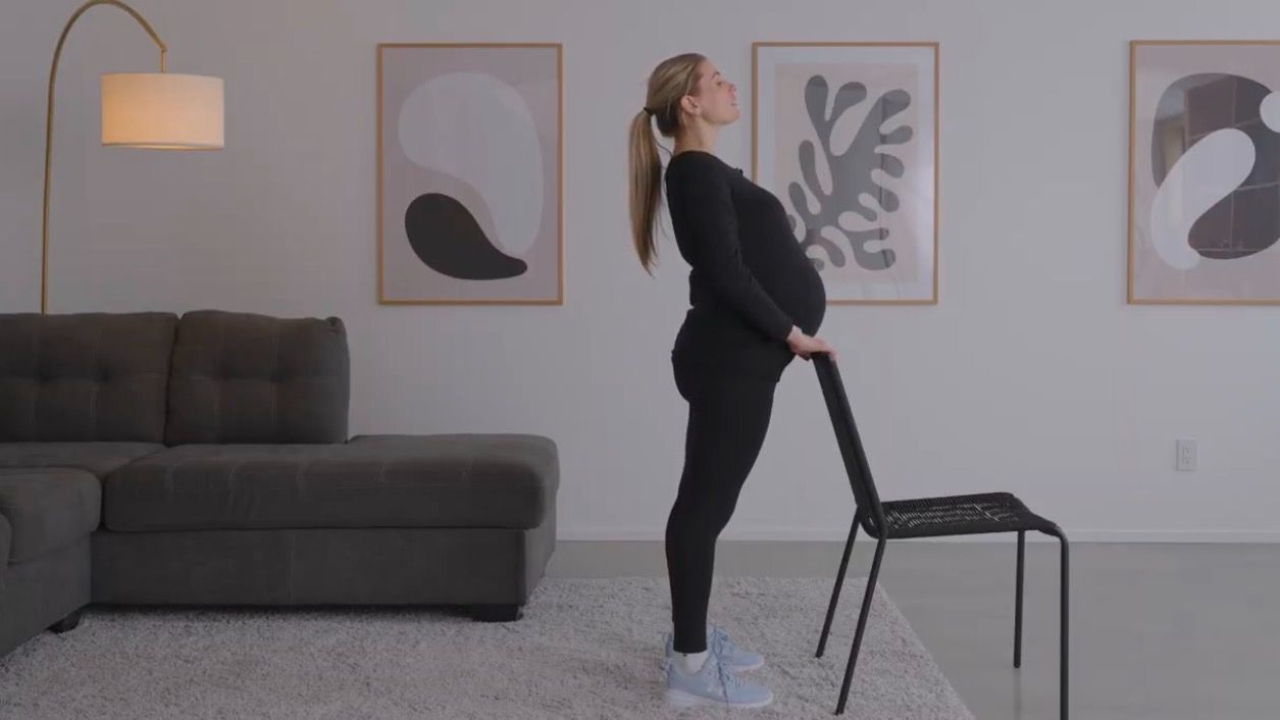
Pregnancy is one of those seasons where your body can change week to week. Movements that used to feel “easy” might suddenly feel awkward on your wrists, uncomfortable on your knees, or just not like the right fit for your energy that day.
That doesn’t mean you need to stop moving. It usually just means you need a different setup.
A good modification isn’t a watered-down version of exercise. It’s the same goal (mobility, stability, circulation, posture support)... just delivered in a way that respects your joints, your changing center of gravity, and your breathing mechanics.
In this post, I’m sharing four of my go-to movements right now: cat cow, bird dog, downward dog, and thread the needle. Plus simple ways to modify them without losing what makes them effective. And while I’m in a pregnancy chapter personally, these modifications are not pregnancy-specific. They’re also perfect for anyone who wants less impact, more balance support, and a more joint-friendly setup without giving up the benefits.
What the research says (and a myth worth letting go of)
In uncomplicated pregnancies, exercise is generally considered safe and beneficial, with adjustments as needed.
Here are a few peer-reviewed findings that are worth knowing:
- Lower risk of gestational diabetes and hypertensive disorders: A 2024 review found prenatal exercise significantly decreases risk of gestational diabetes (GDM) and hypertensive disorders of pregnancy (HDP).
- Lower chance of cesarean birth: A meta-analysis of randomized trials found a 15% lower risk of cesarean delivery in exercise groups (RR 0.85).
- Less pregnancy-related back + pelvic pain severity: A 2019 systematic review and meta-analysis found prenatal exercise decreased the severity of low back and pelvic girdle pain during and following pregnancy.
- Not linked with higher preterm birth risk in healthy pregnancies: A 2023 systematic review and meta-analysis reported no association between exercise during pregnancy and increased risk of preterm delivery in healthy pregnancies.
And here’s the myth worth letting go of: for most healthy pregnancies, the goal isn’t to totally take it easy. It’s to stay mindful and keep moving, while adjusting positions, intensity, and volume based on real-time feedback from your body.
You don’t need intense workouts to benefit. Consistent, moderate movement absolutely counts.
The 4 Moves: Benefits + Joint-Friendly Modifications
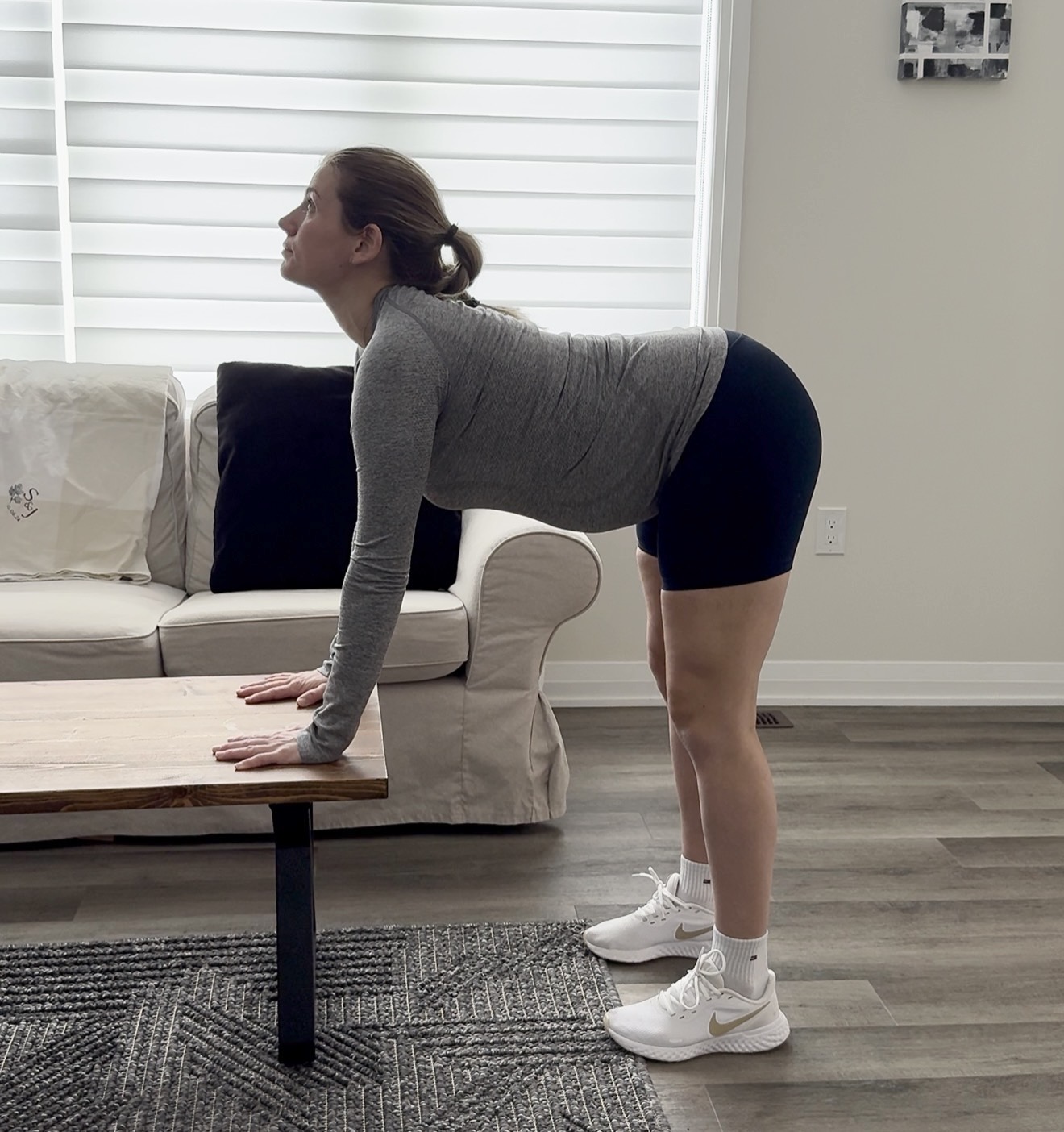
Cat–Cow
Why it’s beneficial: Cat–cow is one of the simplest ways to move your spine through flexion and extension, especially through the mid and upper back (where posture changes tend to show up). It’s also a great way to reconnect to breath expansion and relieve that compressed feeling that can build through the ribcage and low back.
How to do it: Move slowly between rounding your back and gently opening your chest. Let your breath guide the pace.
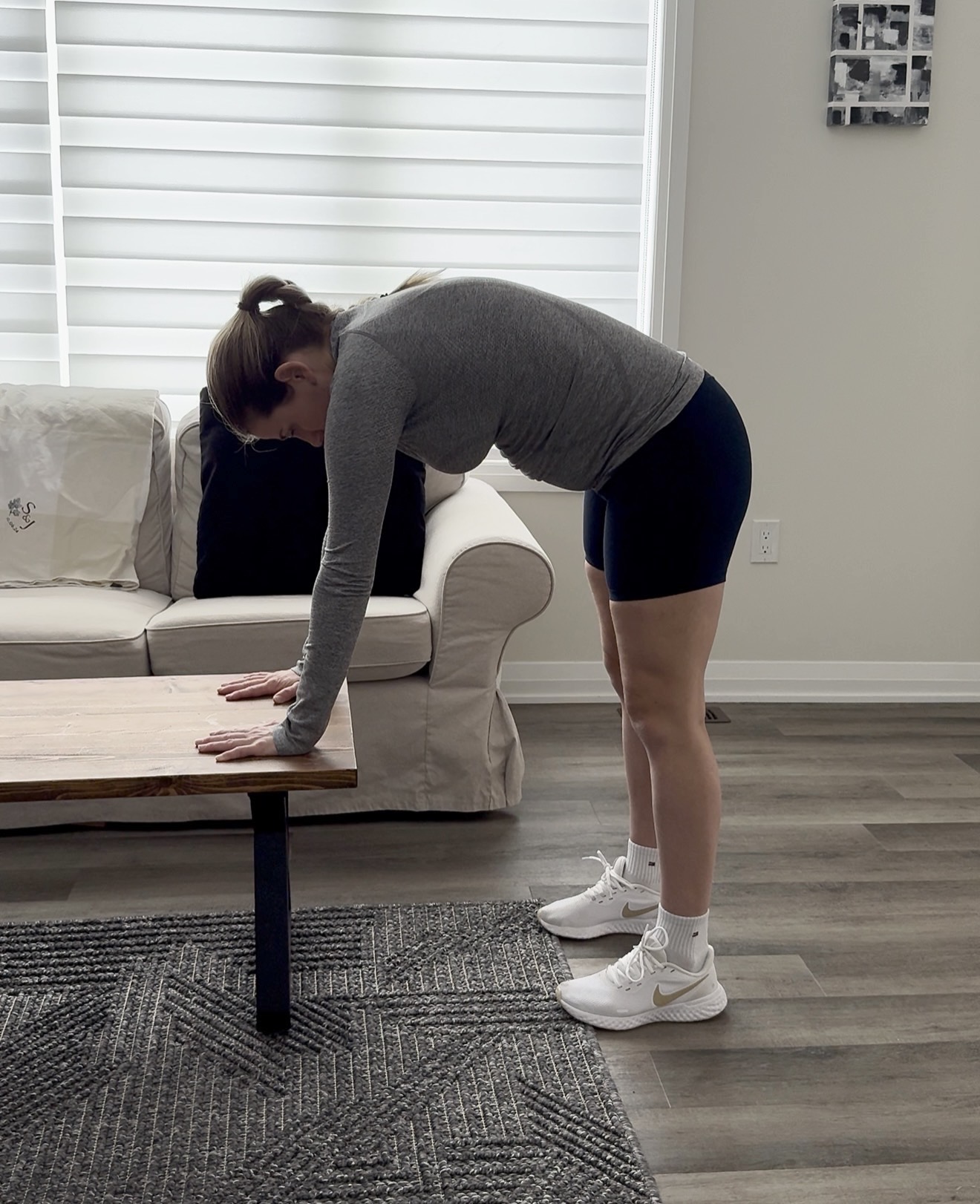
Modification (same benefits, more comfort): If the floor position doesn’t feel good for wrists, knees, or hips, do cat–cow with hands on a countertop or a sturdy chair. You’ll still get the same spinal motion, but with less joint pressure and more control. Keep the range smaller than you think. This movement works best when it’s controlled, not forced.
Quick cue: Think “move through the ribs and upper back,” not just arching and rounding your low back.
 .
. 
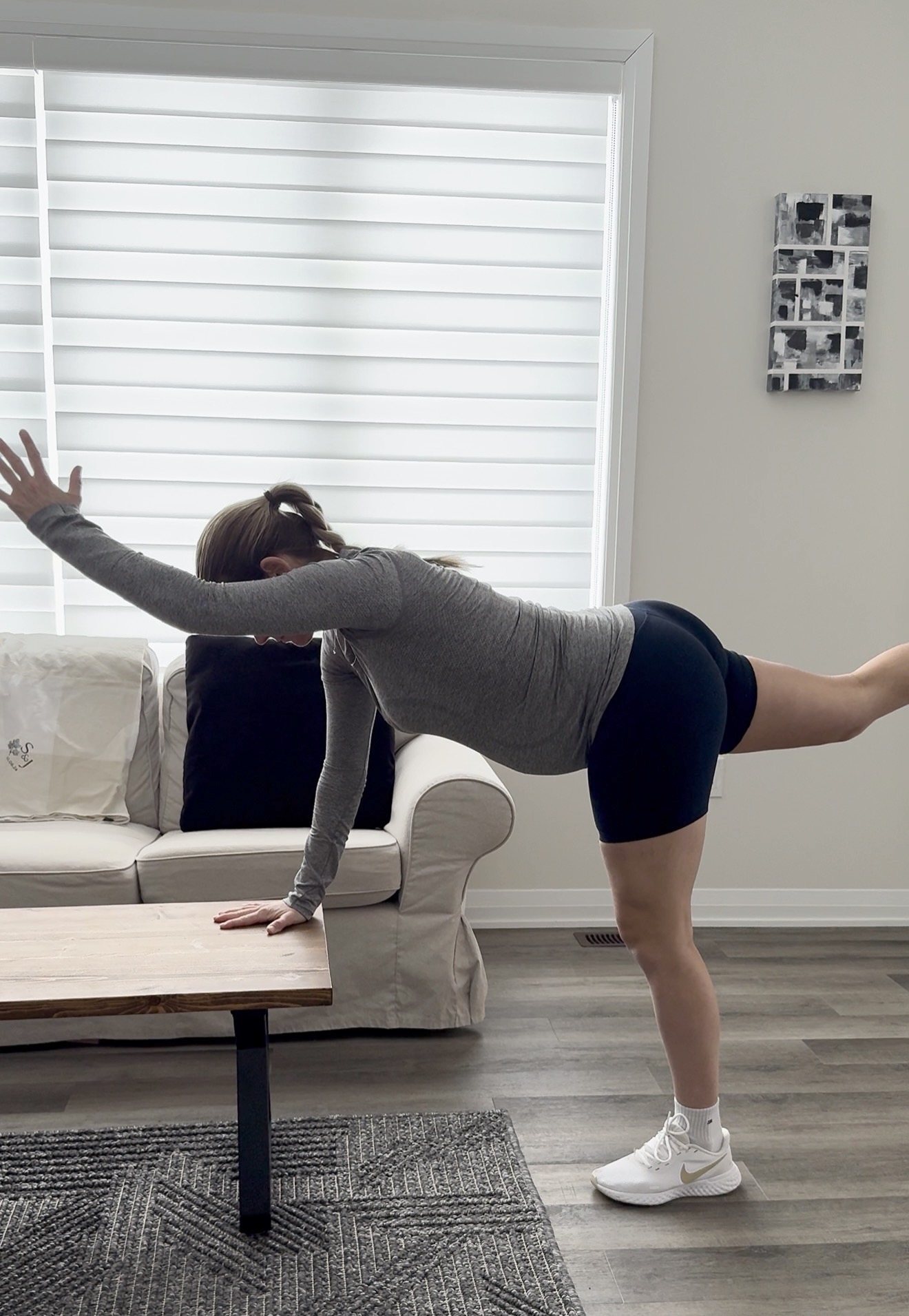
Bird Dog
Why it’s beneficial: Bird dog is one of my favourites for building core strength and overall stability without heavy load. It trains the kind of coordination your body uses in real life: staying steady through your trunk while your arms and legs move.
How to do it: From hands and knees, reach opposite arm and leg long, then return with control.
Modification (same benefits, less strain): If you don’t want pressure on your knees or wrists, do bird dog elevated at a countertop. Hinge slightly forward, keep both hands supported, and reach one leg back at a time. You can also scale it down without making it less effective: reach the leg only, reach the arm only, shorten the range, or slow the pace. The goal is control.
Quick cue: Exhale first, keep your ribs stacked, then reach. This keeps it controlled instead of dumping into the low back.
Downward Dog
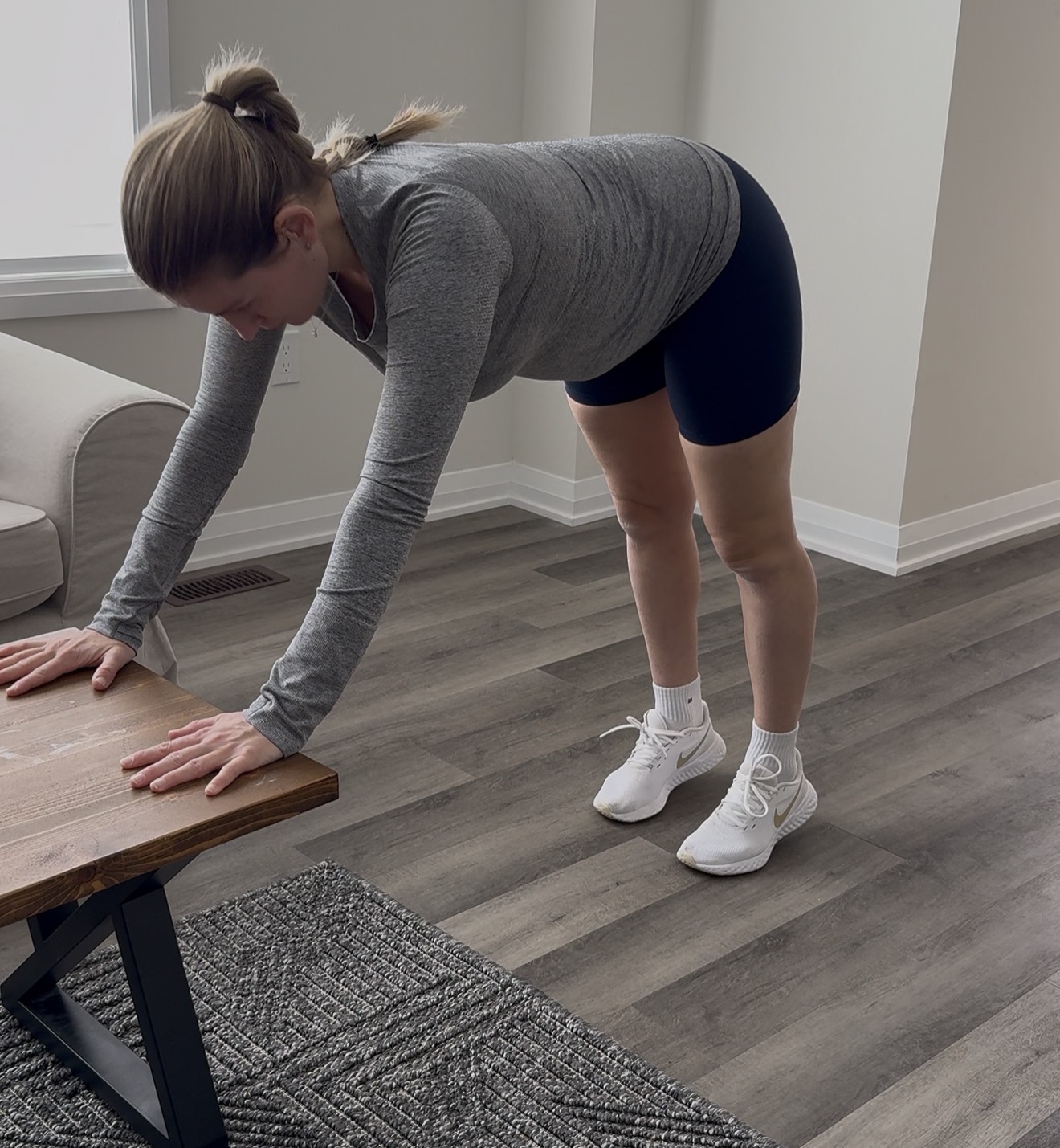
Why it’s beneficial: Downward dog can be a great full-body position for shoulder mobility, posterior chain length (calves and hamstrings), and a sense of decompression — if it feels good for your body that day.
How to do it: Hips lift up and back, arms reach long, and the spine stays lengthened.
Modification (same benefits, better comfort): Wall down dog or countertop down dog can feel just as effective as the floor version, and often more comfortable as your body changes or if you’re managing balance or joint sensitivity. Bend your knees as much as you need. The goal is a long spine and open shoulders, not straight legs. Widen your stance to create space and make breathing easier.
Quick cue: Long spine first. Straight legs second.
Thread the Needle
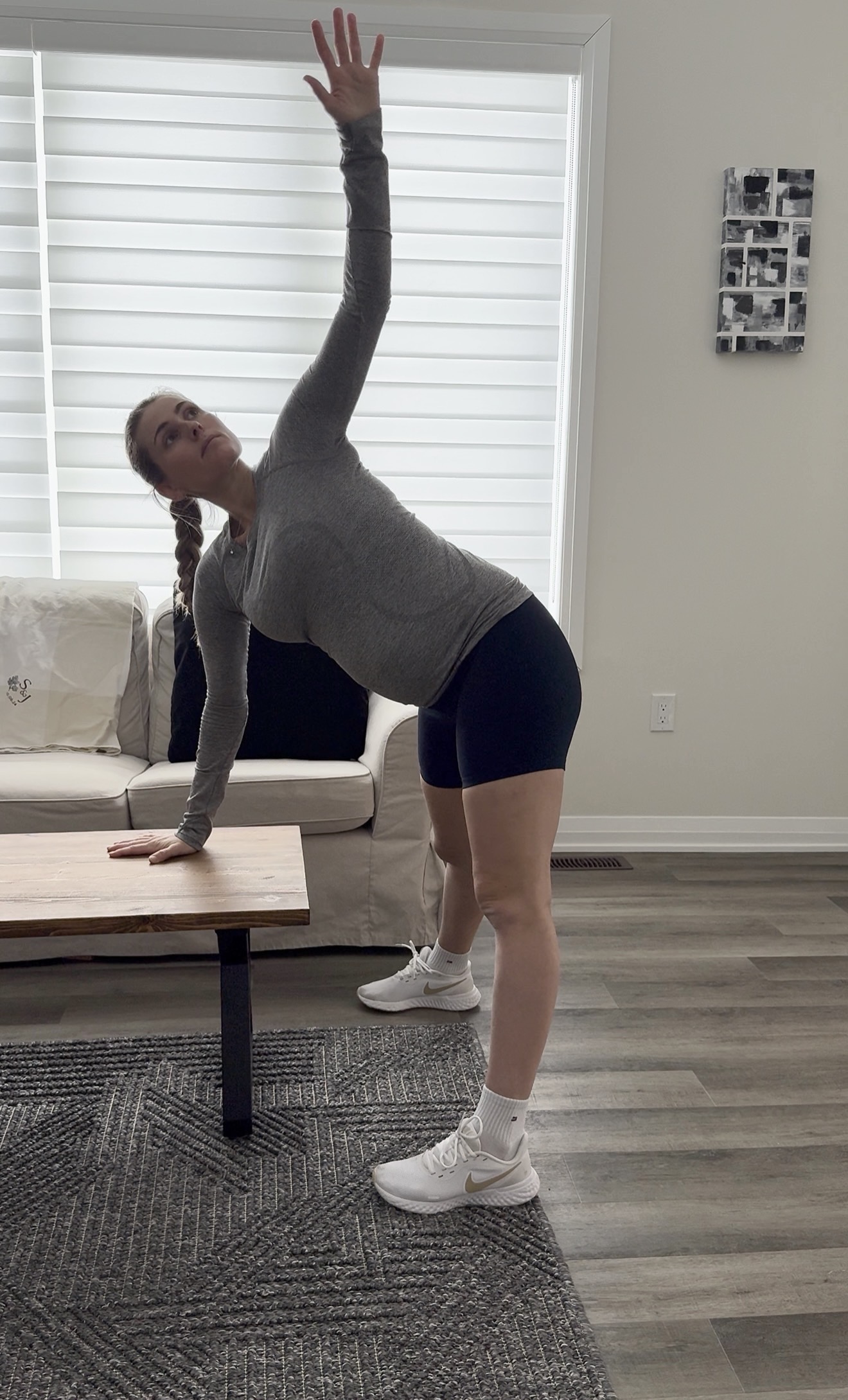
Why it’s beneficial: Thread the needle encourages gentle thoracic rotation (upper back), which can help ease tension through the shoulders, chest, and neck. These areas often feel more loaded from posture changes, sleep positions, and daily life.
How to do it: From hands and knees, reach one arm under your body, rotate gently, then return.
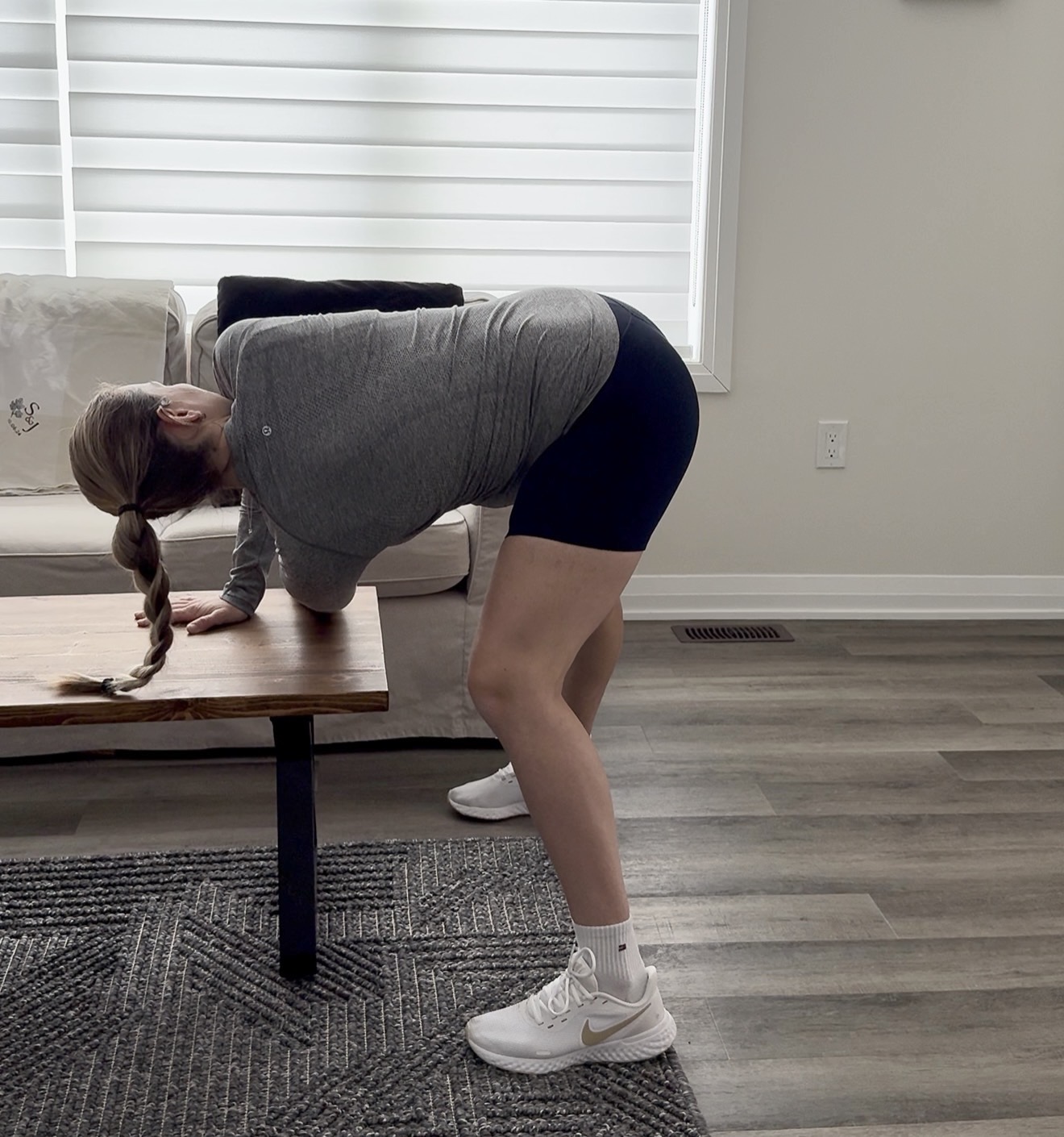
Modification (same benefits, easier setup): Do it standing at a wall or countertop. Keep one hand supported while the other reaches under and across, then opens back up. Keep it slow and breath-led so you feel the rotation through ribs and upper back rather than cranking your low back.
Quick cue: Rotate through the ribs, not by forcing the arm.
A Simple 5-Minute Routine Using These 4 Moves
If you want an easy way to repeat this without thinking, try:
Countertop Cat–Cow: 6 slow reps
Bird Dog (elevated or floor): 5 reps per side
Down dog (countertop or wall): 3 slow breaths
Thread the Needle (standing or floor): 4 reps per side
Repeat once if you have time.
Click here for a video demonstration of this routine.
This is enough to support posture, breathing mechanics, trunk stability, and upper back mobility without needing a long workout.
The takeaway
Pregnancy isn’t the time to prove something with your workouts. It’s the time to stay connected to your body and keep movement feeling supportive.
And even beyond pregnancy, this approach matters. If the floor feels like too much, if your wrists or knees are sensitive, if balance feels different, or if you simply want a lower-impact option that still works, modifications are a smart way to keep moving consistently.
If a position doesn’t feel good on a certain day, that’s not your body getting weaker. It’s feedback and a small change in setup is often all it takes to keep the benefits while making the movement feel better.
If you’d like more gentle routines like this, follow along inside Inclusive Movement, where every session includes options so you can meet your body where it’s at.
Follow along on Instagram, TikTok, and YouTube, or join the email list at the bottom of this page to get helpful wellness tips and tricks right into your inbox.